Published 9 July 2026, by David Clare
Most organisations do not have a branding problem. They have a clarity problem.
When businesses decide that their brand needs attention, the conversation often begins with visual identity. There are discussions about logos, colours, typography or websites. These are important, but they are not the place to start. They are the expression of a brand, not its foundation.
A strong brand begins with clarity. Before an organisation can communicate effectively, it must first understand exactly who it is, what it stands for, who it serves and why people should choose it over every alternative. Without that clarity, even the most beautifully designed identity will struggle to achieve meaningful results.
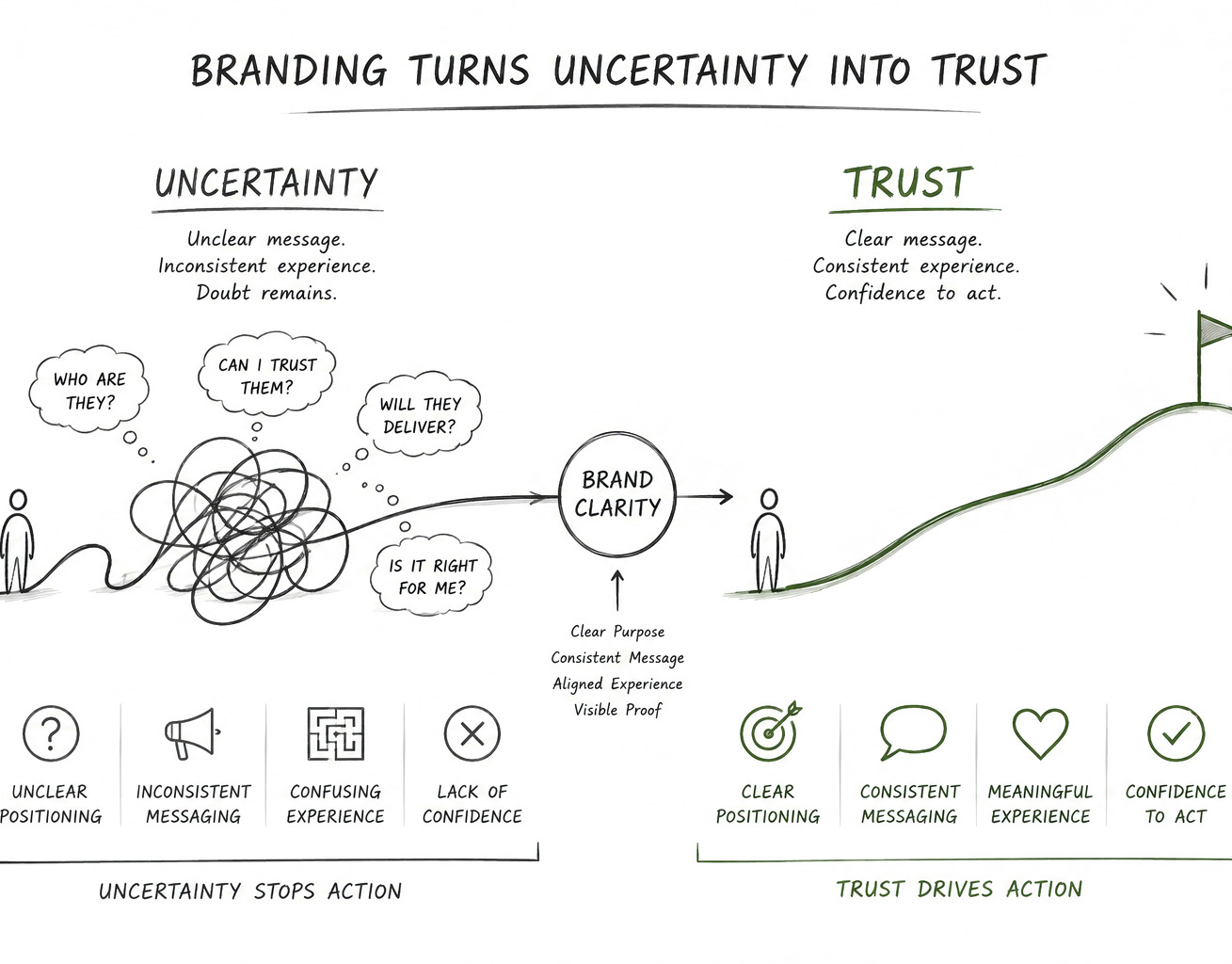
Brand clarity is not about simplifying a business until it becomes bland. It is about removing uncertainty. It creates confidence for customers, reassurance for stakeholders and focus for everyone inside the organisation.
In a world where people are overwhelmed by information and faced with endless choice, clarity has become one of the most valuable assets a business can possess.
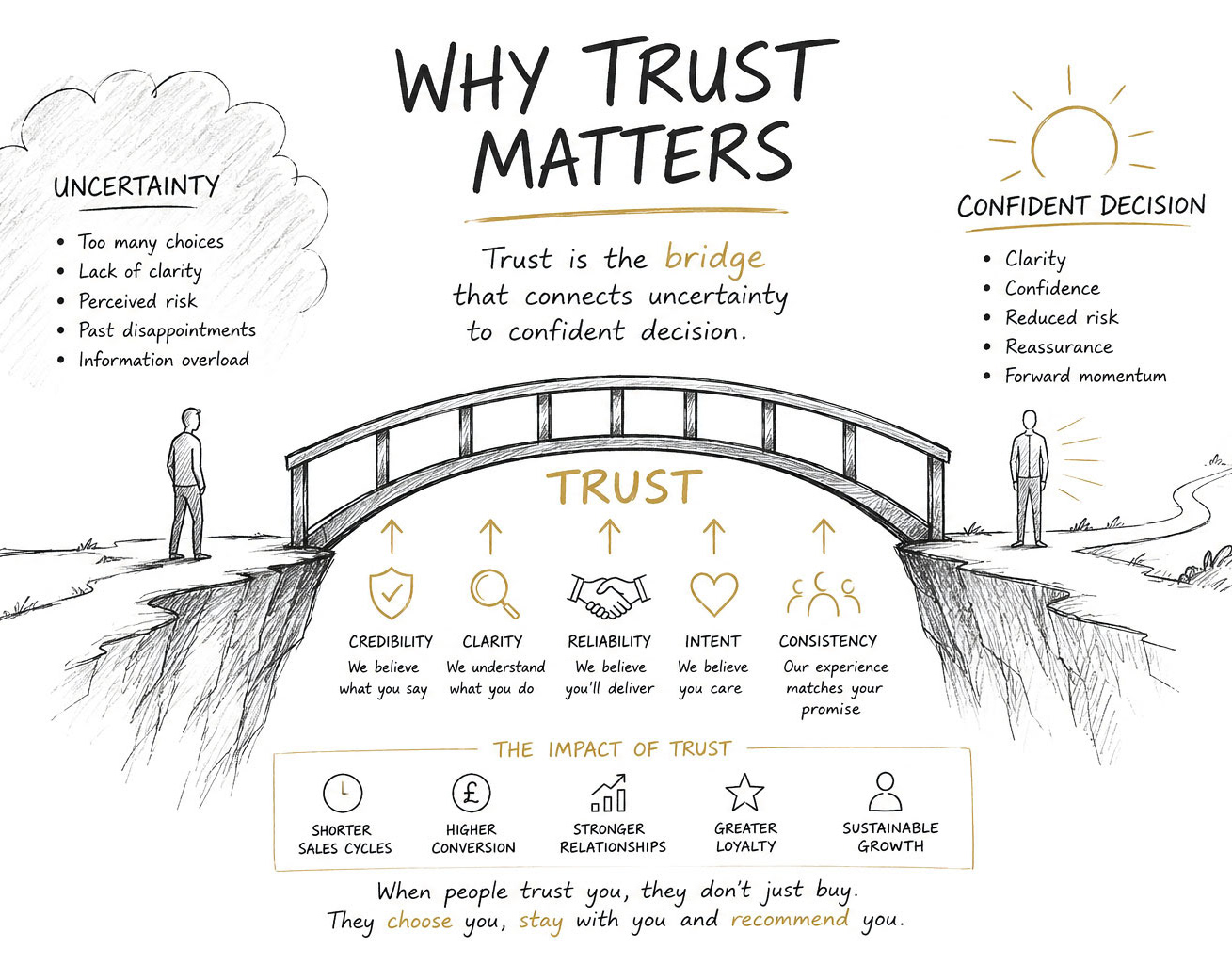
When people understand you, they are far more likely to trust you. When they trust you, they are more willing to take the next step.
That principle lies at the heart of every successful brand.
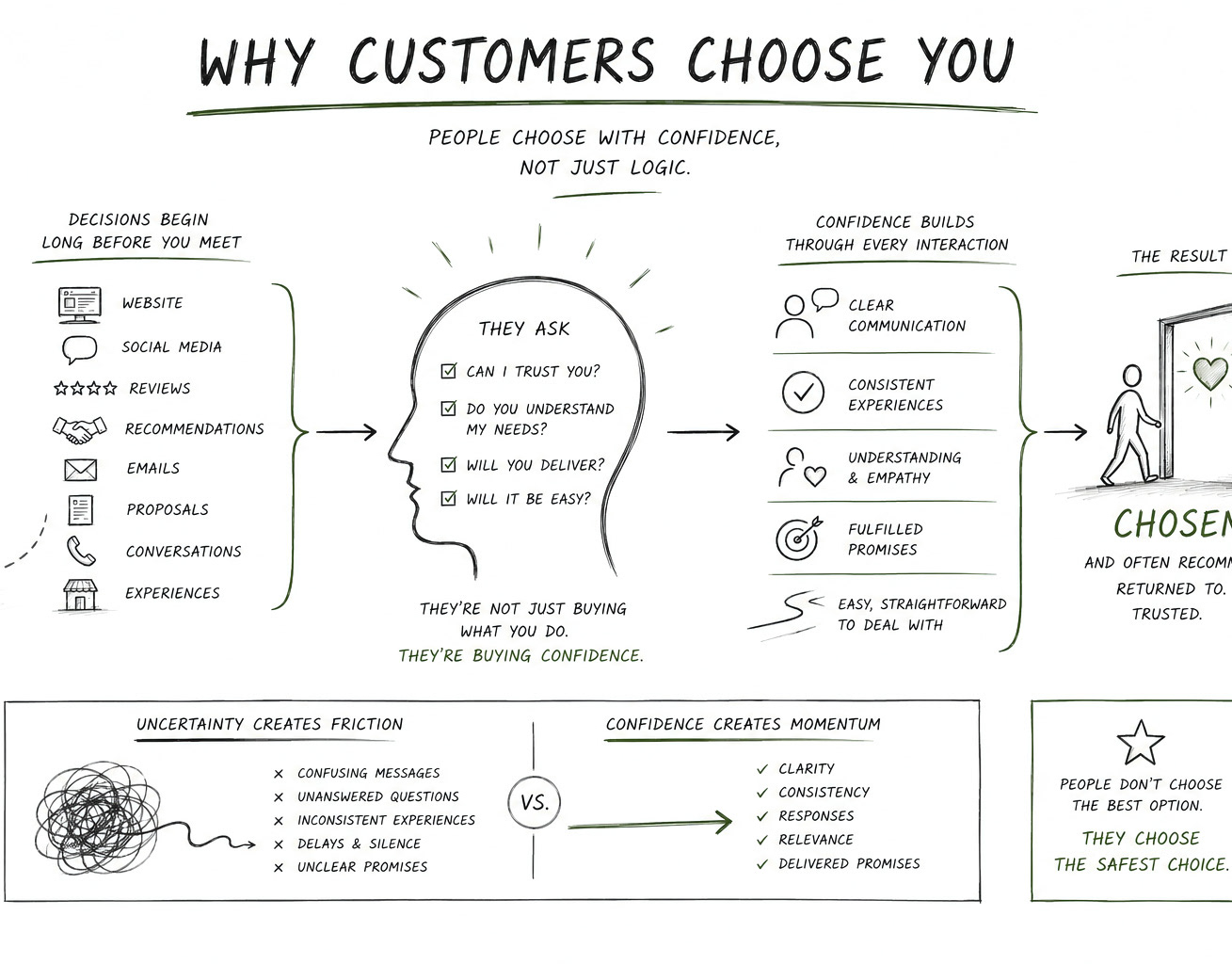
Customers rarely buy the product with the longest specification sheet or the greatest number of features. They buy the product or service that feels like the safest decision. They choose the company that appears to understand their problem, communicates with confidence and demonstrates that it can deliver on its promises.
Clarity makes that possible.
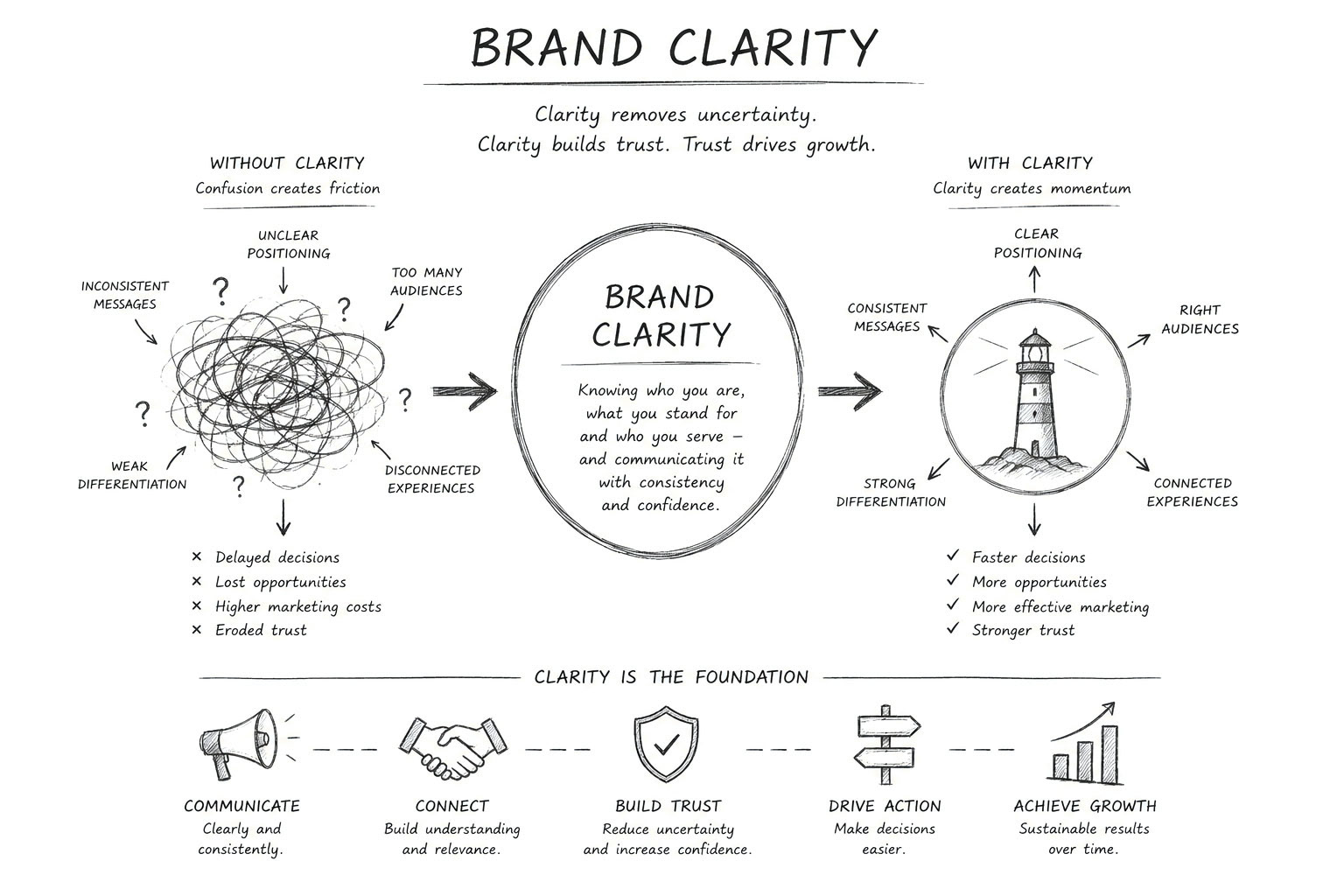
Confusion has the opposite effect. When messages become inconsistent, when different parts of an organisation describe themselves in different ways, or when marketing tries to say everything to everyone, uncertainty begins to grow. Prospective clients hesitate. They postpone decisions. They look elsewhere for reassurance.
Often, businesses do not even recognise this is happening. They assume they have a sales problem, a pricing problem or a marketing problem, when in reality people simply do not understand what makes them different.
The cost of that confusion is significant.
Sales take longer to secure. Marketing becomes less effective. Teams spend more time explaining than inspiring. New opportunities fail to develop because potential clients cannot quickly understand the value being offered.
Every moment spent explaining something that should have been immediately obvious is a cost to the business.
Brand clarity removes that friction.
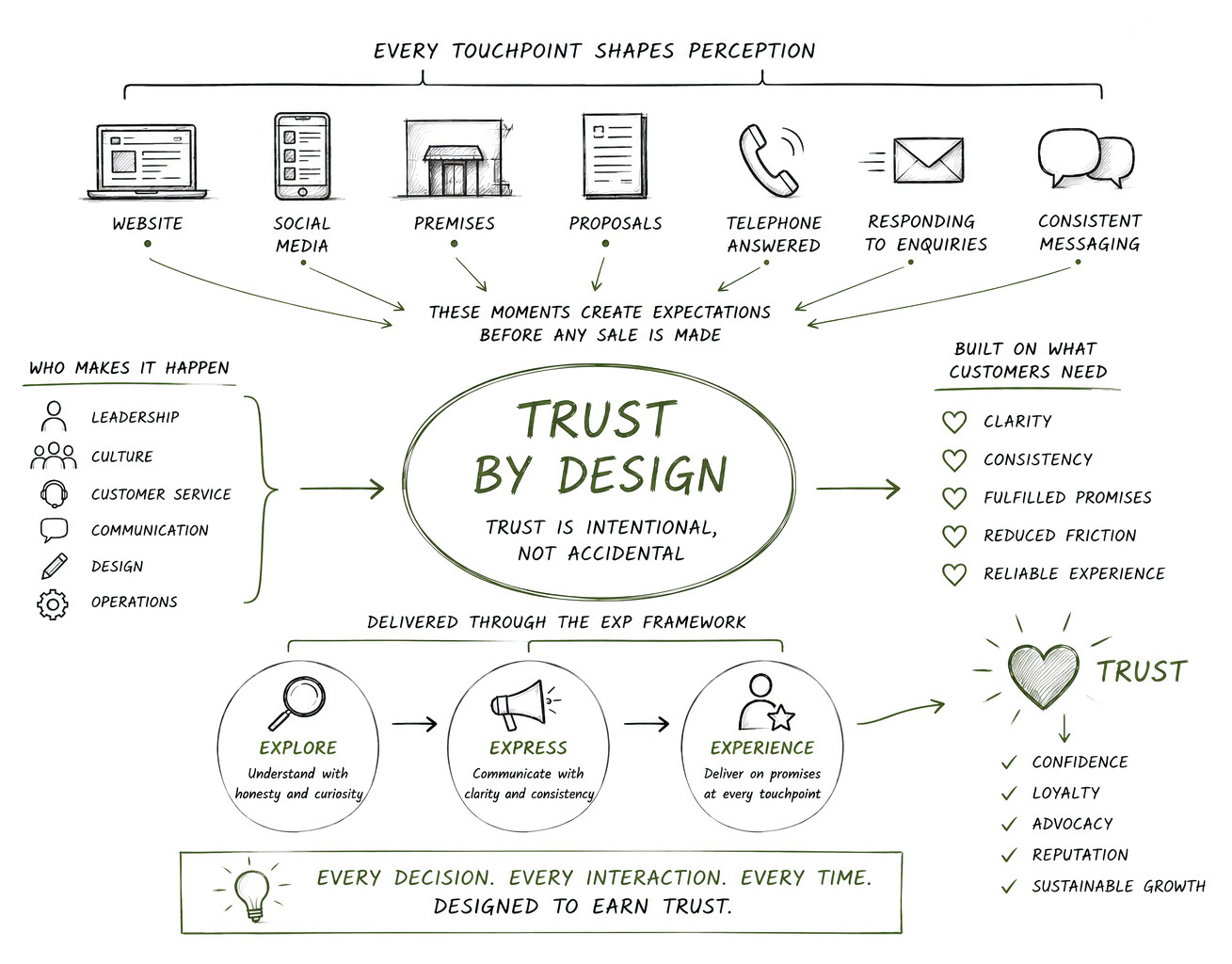
It allows an organisation to communicate consistently across every touchpoint, whether that is a website, presentation, proposal, exhibition, social media post or face-to-face meeting. Instead of every piece of communication trying to explain the business from the beginning, each one reinforces the same central idea.
Over time that consistency builds recognition.
... Recognition develops into familiarity.
... Familiarity develops into trust.
... Trust develops into action.
... Recognition develops into familiarity.
... Familiarity develops into trust.
... Trust develops into action.
That sequence is rarely accidental. It is the result of a clear strategy that guides every decision an organisation makes about how it presents itself.
This is why branding should never begin with design software.
It begins with questions.
• What do people currently think about your organisation?
• What do you want them to think?
• Where is the gap between those two perceptions?
• What evidence exists to support the promises you are making?
• Which parts of your organisation inspire confidence and which create doubt?
• What do you want them to think?
• Where is the gap between those two perceptions?
• What evidence exists to support the promises you are making?
• Which parts of your organisation inspire confidence and which create doubt?
These questions are often more valuable than the answers because they expose the assumptions that have quietly developed over time.
Many organisations become so familiar with their own business that they stop seeing it through the eyes of their customers. Language that makes perfect sense internally becomes confusing externally. Processes that feel logical inside the organisation appear unnecessarily complicated to new clients.
Brand clarity requires stepping outside those assumptions and looking at the organisation from the perspective of someone making a decision for the very first time.
That fresh perspective frequently reveals opportunities that have been hidden in plain sight.
Sometimes it identifies strengths that have never been communicated effectively. Sometimes it exposes weaknesses that are damaging confidence without anyone realising. Most importantly, it provides the foundation for every future investment in marketing, communications and design.
Without clarity, every marketing activity becomes less effective because it is built upon uncertain foundations.
With clarity, every investment works harder.
This applies equally to organisations of every size.
A start-up seeking its first customers needs clarity just as much as an established organisation preparing for its next phase of growth. A charity asking supporters to donate, a retailer launching a new concept, a school attracting prospective families or a heritage organisation raising funds all depend upon the same principle.
People need confidence before they commit.
That confidence begins long before they sign a contract, make a donation or place an order.
It begins with how an organisation makes them feel.
The strongest brands communicate confidence without appearing arrogant. They are clear without being simplistic. They explain without overwhelming. They understand that every interaction either strengthens trust or weakens it.
This is where good design becomes powerful.
Design is not decoration. It is communication.
Its role is to make understanding easier, not harder. Good design organises information, establishes hierarchy, removes distractions and helps people navigate complex ideas with confidence.
When design is built upon genuine brand clarity, it becomes a commercial asset rather than simply an aesthetic improvement.
• It supports sales conversations.
• It strengthens presentations.
• It increases confidence.
• It reinforces reputation.
• Most importantly, it helps people make decisions more easily.
That is ultimately what branding exists to achieve.
Every successful project I have worked on over the past three decades has shared this common characteristic. The organisations that achieved the greatest results were rarely those with the biggest budgets. They were those that became exceptionally clear about who they were and communicated that consistently over time.
• Their visual identity reflected their strategy.
• Their messaging reflected their purpose.
• Their communications reflected their values.
• Everything worked together because everything began with clarity.
• Their messaging reflected their purpose.
• Their communications reflected their values.
• Everything worked together because everything began with clarity.
Brand clarity is therefore not an isolated exercise. It is the point at which strategy, communication and design come together to create confidence.
That confidence creates trust.
Trust reduces uncertainty.
Reduced uncertainty allows decisions to be made.
And every positive decision moves an organisation closer to sustainable growth.
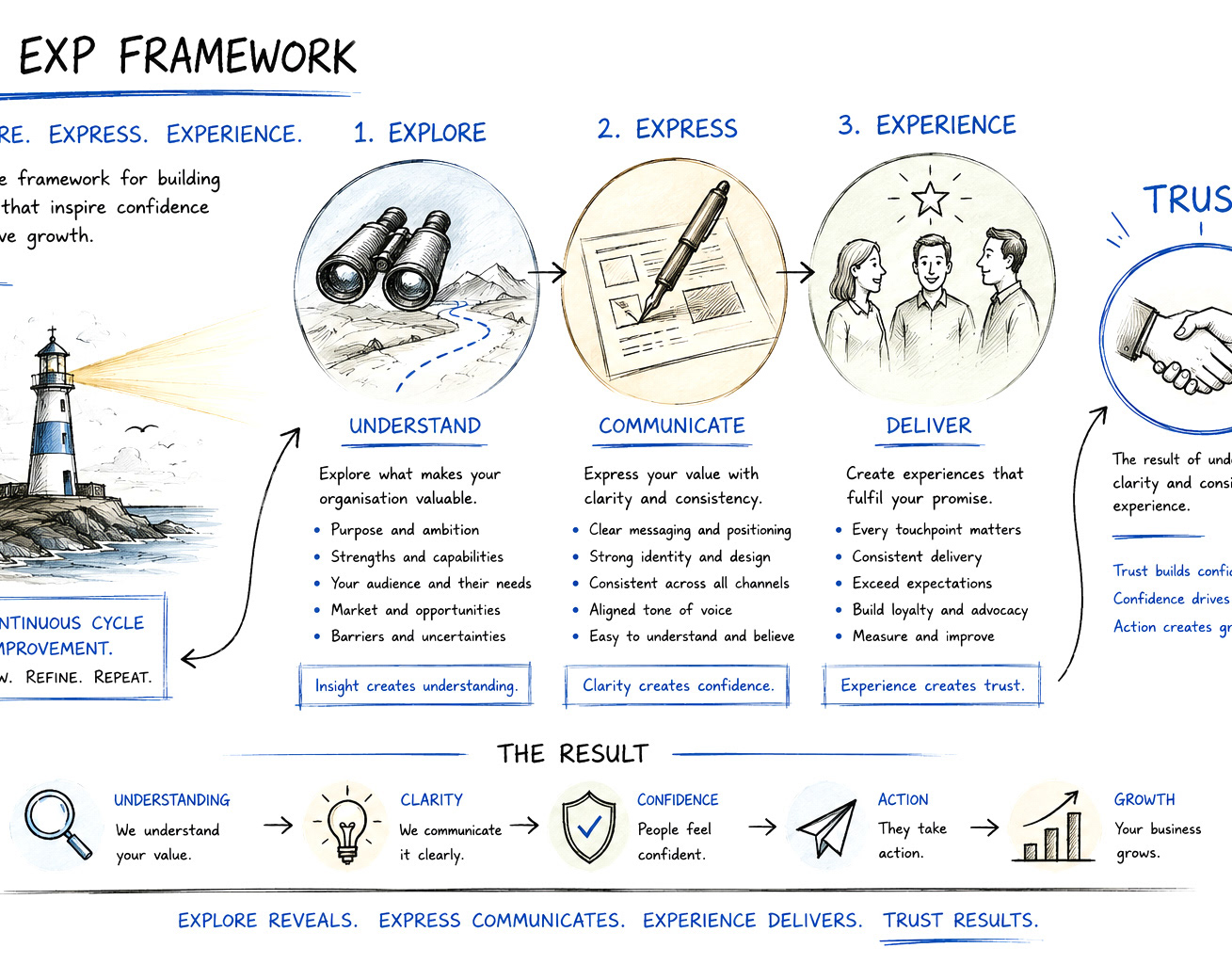
The next article in this series explores how this process can be applied systematically through the EXP Framework—a practical methodology developed to help organisations uncover what matters most, define what makes them distinctive and communicate with greater confidence and consistency.
___________________________________________
by David Clare FRSA
Founder, Exposed Design Consultants
Founder, Exposed Design Consultants
“The Journal is a collection of ideas developed through more than 35 years of working with organisations across retail, education, heritage, corporate and not-for-profit sectors. Every article explores one simple belief: when uncertainty is reduced, confidence grows; when confidence grows, trust follows; and when trust exists, organisations are far better placed to succeed.”
Trust by Design.