Published 7 July 2026, by David Clare
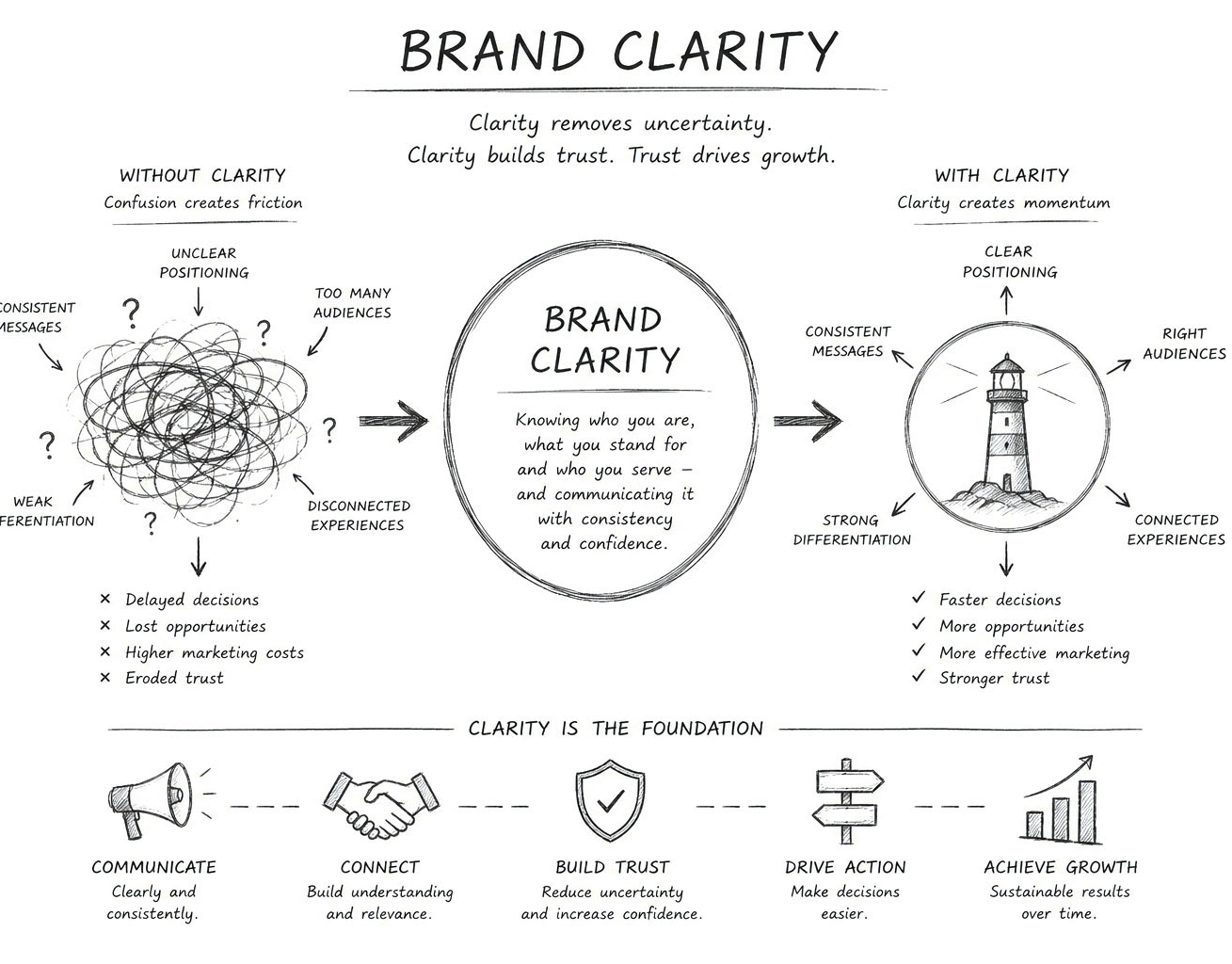
Every important decision begins in exactly the same place. Uncertainty.
Whether we are choosing a school for our children, appointing an accountant, selecting an architect, investing in a new technology platform or deciding which organisation to support through a charitable donation, we all face the same dilemma. We have to make a judgement before we have experienced the outcome. We commit before we know with certainty whether our decision will prove to be the right one.
The greater the importance of the decision, the greater the uncertainty usually becomes.
This simple observation has shaped much of my thinking over the past three decades. Having worked with organisations ranging from commercial businesses to schools, heritage organisations and charities, I have become increasingly convinced that the most valuable asset any organisation possesses is not its logo, its website or even the quality of its products and services.
It is trust.
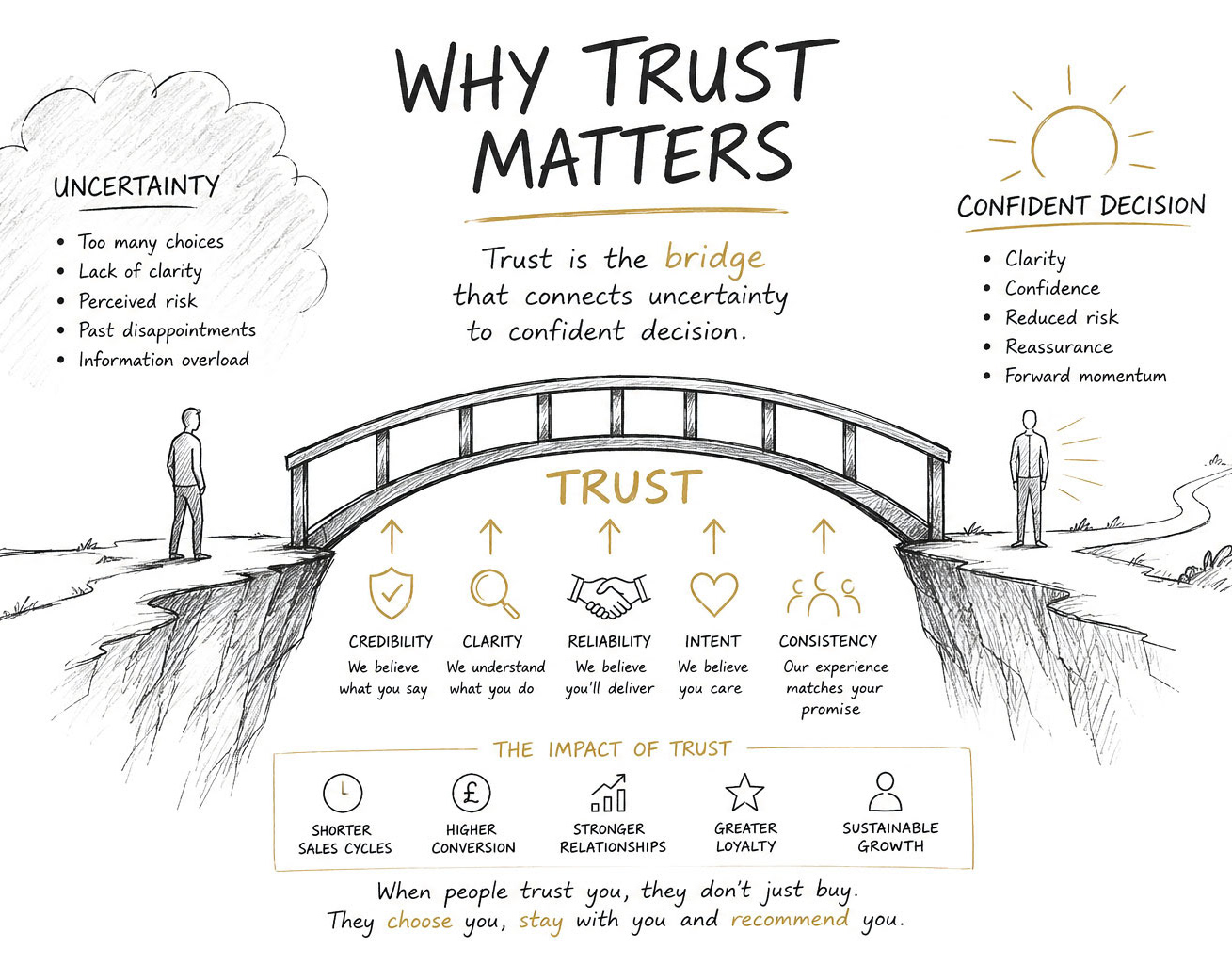
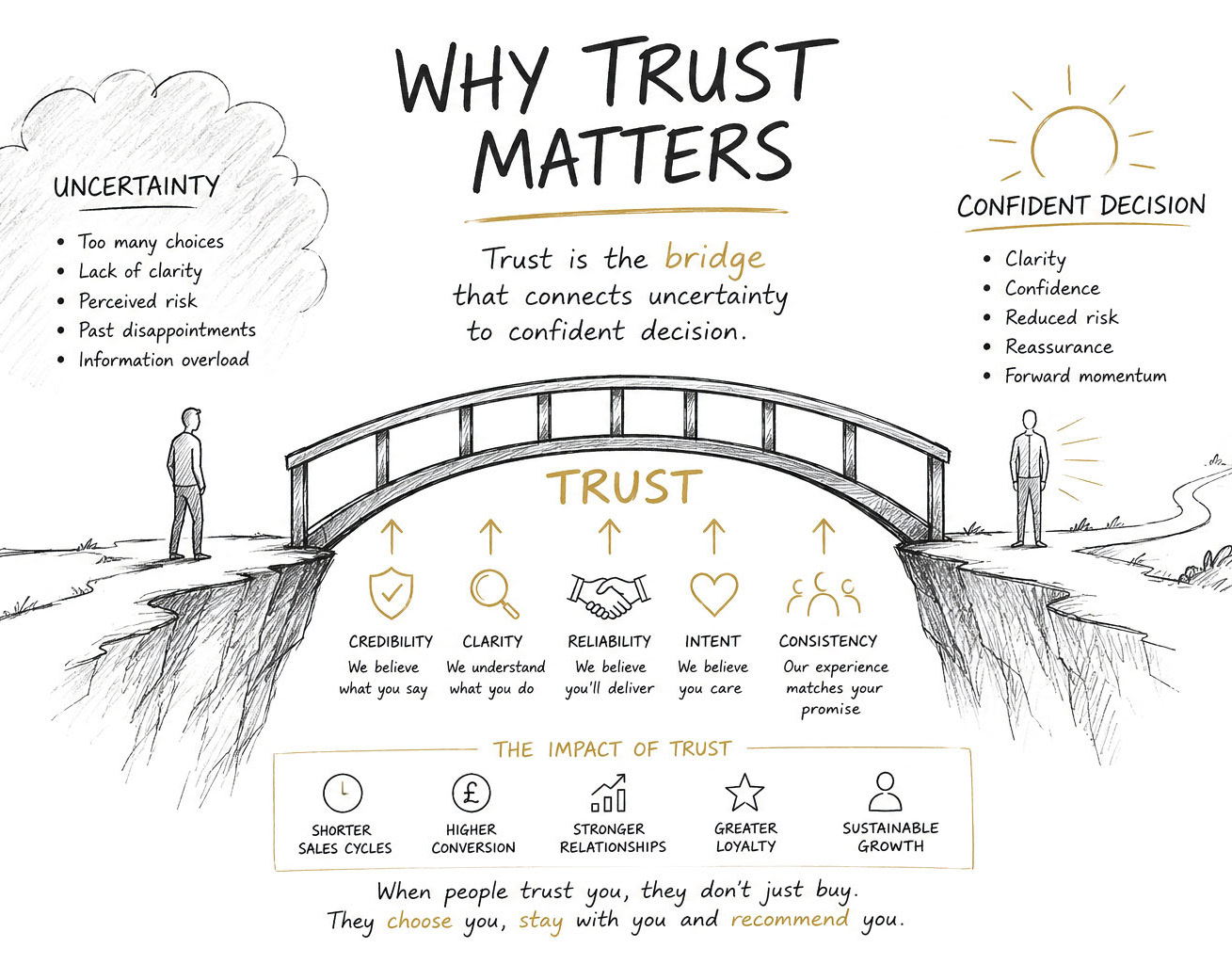
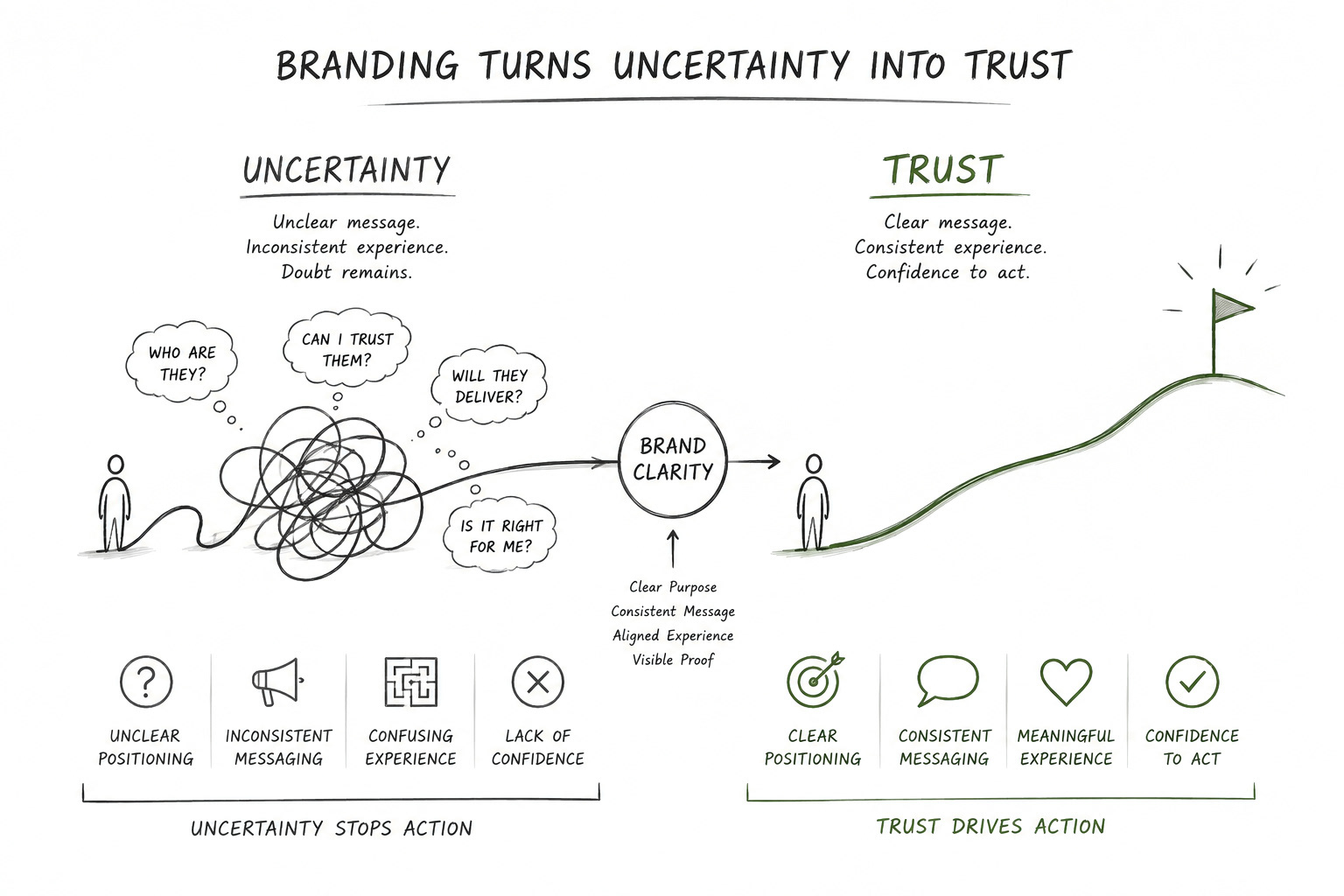
Not trust as an abstract aspiration, but trust as something practical. Trust reduces uncertainty. It provides confidence when certainty is impossible. In many respects, it acts as a bridge between what people know today and the decision they need to make tomorrow.
Once viewed in that way, branding, communication and reputation begin to take on a very different significance.
Looking Beyond Products and Services
Many organisations naturally believe they compete on the quality of their products, the breadth of their services or the competitiveness of their prices. Those factors are undoubtedly important, but they rarely explain why one organisation is chosen over another when both appear equally capable.
Think about the decisions we make every day.
A parent cannot fully experience a school’s education before enrolling their child.
A company appointing a consultant cannot know precisely how successful the relationship will become.
A donor cannot see the full impact of a fundraising appeal before making a gift.
In each case, there is an unavoidable gap between the decision and the experience.
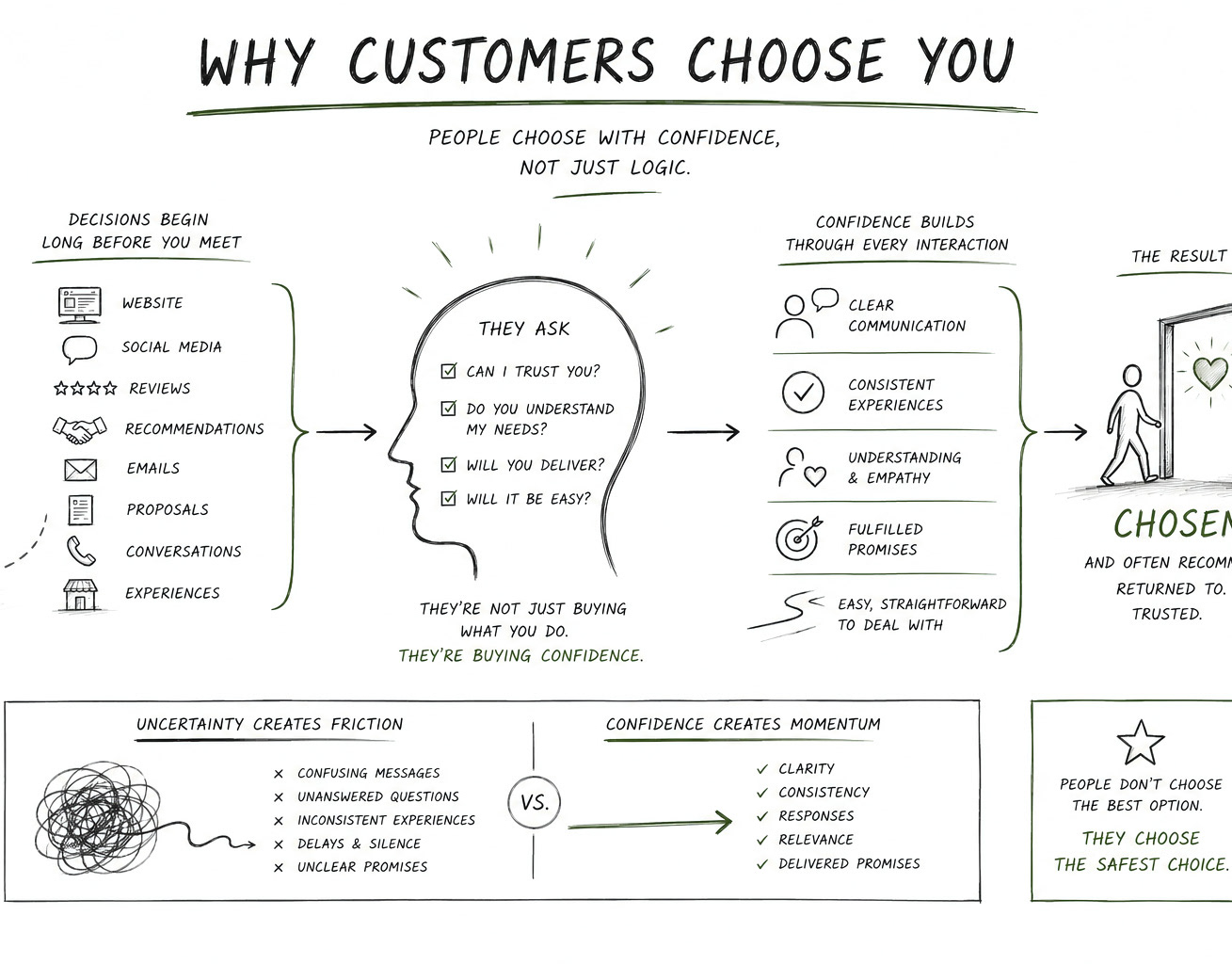
People, therefore, look for something else.
They look for evidence.
• Evidence that the organisation is competent.
• Evidence that it understands its purpose.
• Evidence that others have placed their confidence in it.
• Evidence that it communicates clearly, behaves consistently and appears worthy of trust.
The interesting point is that these are rarely conscious calculations. They happen instinctively. Every interaction contributes another piece of evidence that either reduces uncertainty or quietly increases it.
The Trust Bridge
This has led me to think about trust not as a destination, but as a bridge.
The less experience people have of an organisation, the more they rely upon trust. As experience grows, trust becomes reinforced—or weakened—by reality. That bridge is constructed from many individual components.
• A recommendation from a respected colleague.
• A clear and informative website.
• A thoughtful proposal.
• A well-written annual report.
• An engaging exhibition.
• A consistent visual identity.
• Professional behaviour.
• Clear communication.
• A clear and informative website.
• A thoughtful proposal.
• A well-written annual report.
• An engaging exhibition.
• A consistent visual identity.
• Professional behaviour.
• Clear communication.
None of these elements creates trust on its own.
Together, they reduce uncertainty and make it easier for someone to take the next step.
Together, they reduce uncertainty and make it easier for someone to take the next step.
This is why I believe branding is often misunderstood. It is sometimes seen as the process of creating attractive visual identities. In reality, effective branding is about helping people make confident decisions by reducing uncertainty. Design is one of the tools that supports that objective, but it is never the objective itself.
Signals Matter More Than Claims
One of the strongest organisations I have worked with rarely spoke about being trustworthy.
It didn’t need to.
Its communications were clear. Its people behaved consistently. It delivered on its promises. Every interaction reinforced the same values.
That experience confirmed something I have observed repeatedly throughout my career.
Organisations rarely build trust by claiming they can be trusted. They build trust by behaving in ways that make trust the natural conclusion. This distinction matters.
Modern audiences are exposed to thousands of marketing messages every day. Most claims are quickly forgotten. What remains are the signals that people experience for themselves.
• Consistency.
• Professionalism.
• Reliability.
• Clarity.
• Professionalism.
• Reliability.
• Clarity.
These qualities communicate far more effectively than any advertising slogan ever could.
Questions Worth Asking
Whenever I begin working with an organisation, I find that a few simple questions often reveal far more than a lengthy discussion about design.
What uncertainty is your audience trying to overcome?
Too often, organisations focus entirely on what they want to say, rather than what their audience needs to understand before making a decision.
What evidence are you providing that reduces uncertainty?
Do your communications answer the questions people are already asking, or do they simply describe your organisation?
Does every interaction strengthen trust?
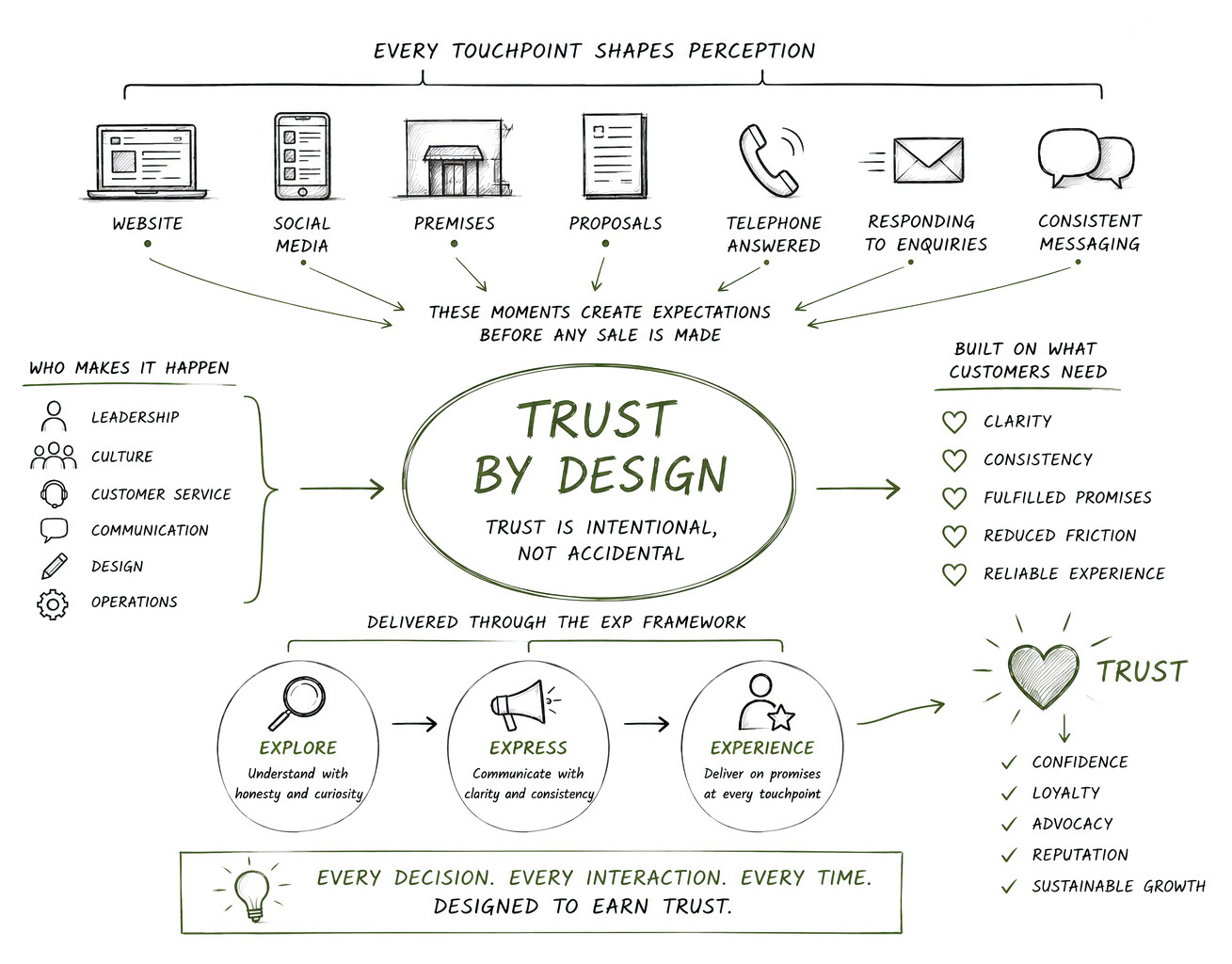
Your audience experiences your organisation as a whole. They do not separate your website from your proposals, your social media from your customer service, or your exhibition from your fundraising literature. Each interaction either strengthens confidence or introduces doubt.
These are strategic questions rather than creative ones, but they often determine whether communication succeeds or fails.
From Experience
One pattern has become increasingly clear throughout my career.
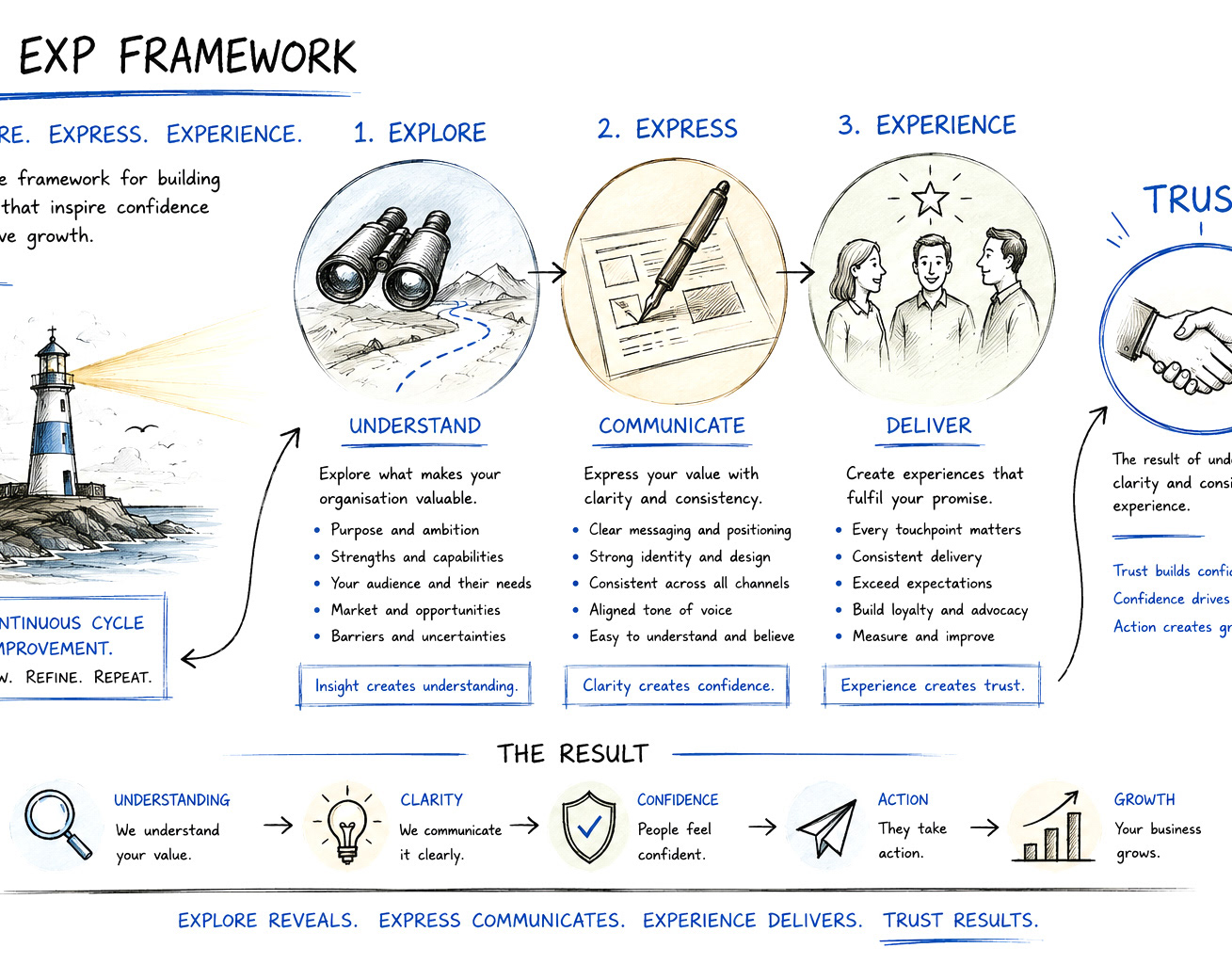
The most successful projects have rarely begun with discussions about colours, typography or visual style. They have begun with questions about people.
Who are we trying to reach?... What concerns might they have?... What uncertainty are they trying to resolve?
Once those questions have been answered, the communication almost always becomes clearer, the design becomes more purposeful, and the outcome becomes more effective.
The creative work is still important, but it follows the thinking rather than leading it.
Why This Matters
Trust has become one of the most valuable currencies in modern organisations because uncertainty has never been greater.
Customers have more choice.
Information is abundant.
Attention is limited.
Confidence is fragile.
In this environment, organisations that consistently reduce uncertainty place themselves in a stronger position to build meaningful relationships.
Seen through this lens, branding, communication and design are not simply promotional activities.
They are strategic tools that help people make informed decisions with confidence.
Final Reflection
Perhaps the most valuable question any organisation can ask is not:
“How do we persuade more people?”
It is this:
“What uncertainty is preventing people from choosing us?”
Answer that question well, and trust has the opportunity to grow.
When trust grows, confidence follows.
When confidence grows, people act.
For me, that is where effective communication begins.
When trust grows, confidence follows.
When confidence grows, people act.
For me, that is where effective communication begins.
___________________________________________
by David Clare FRSA
Founder, Exposed Design Consultants
Founder, Exposed Design Consultants
“The Journal is a collection of ideas developed through more than 35 years of working with organisations across retail, education, heritage, corporate and not-for-profit sectors. Every article explores one simple belief: when uncertainty is reduced, confidence grows; when confidence grows, trust follows; and when trust exists, organisations are far better placed to succeed.”
Trust by Design.