Why the best brands are all about the experience?
Every successful organisation has something that makes it different. It may be exceptional expertise, outstanding customer service, innovative thinking or a culture that genuinely puts people first. Yet many businesses struggle to communicate these qualities in a way that inspires confidence. They invest in marketing, redesign their website, refresh their visual identity or launch new campaigns, but still fail to create the trust that encourages people to buy, recommend or remain loyal.
The challenge is rarely the quality of the organisation itself. More often, it is the inability to fully understand, communicate and consistently deliver what makes that organisation valuable.
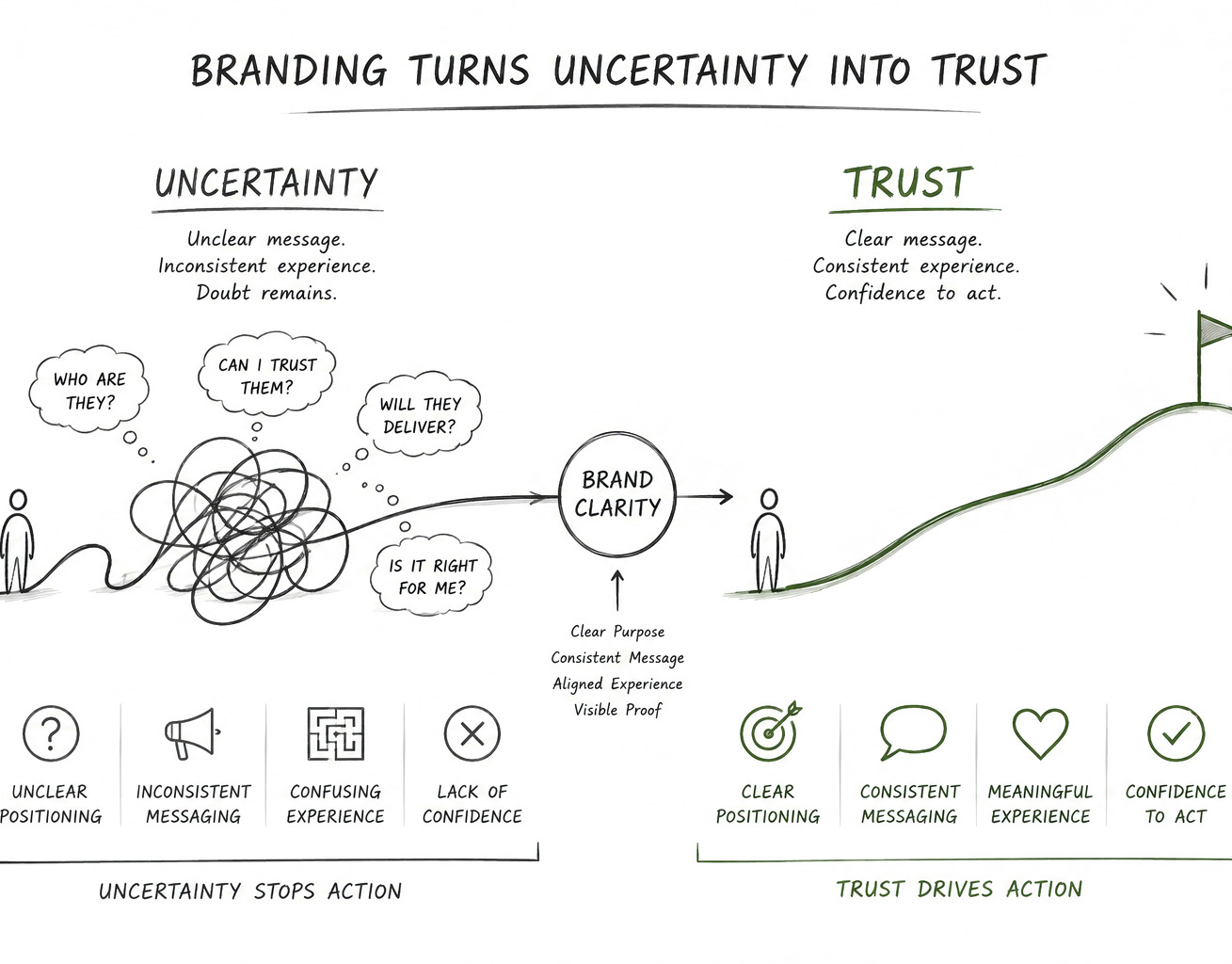
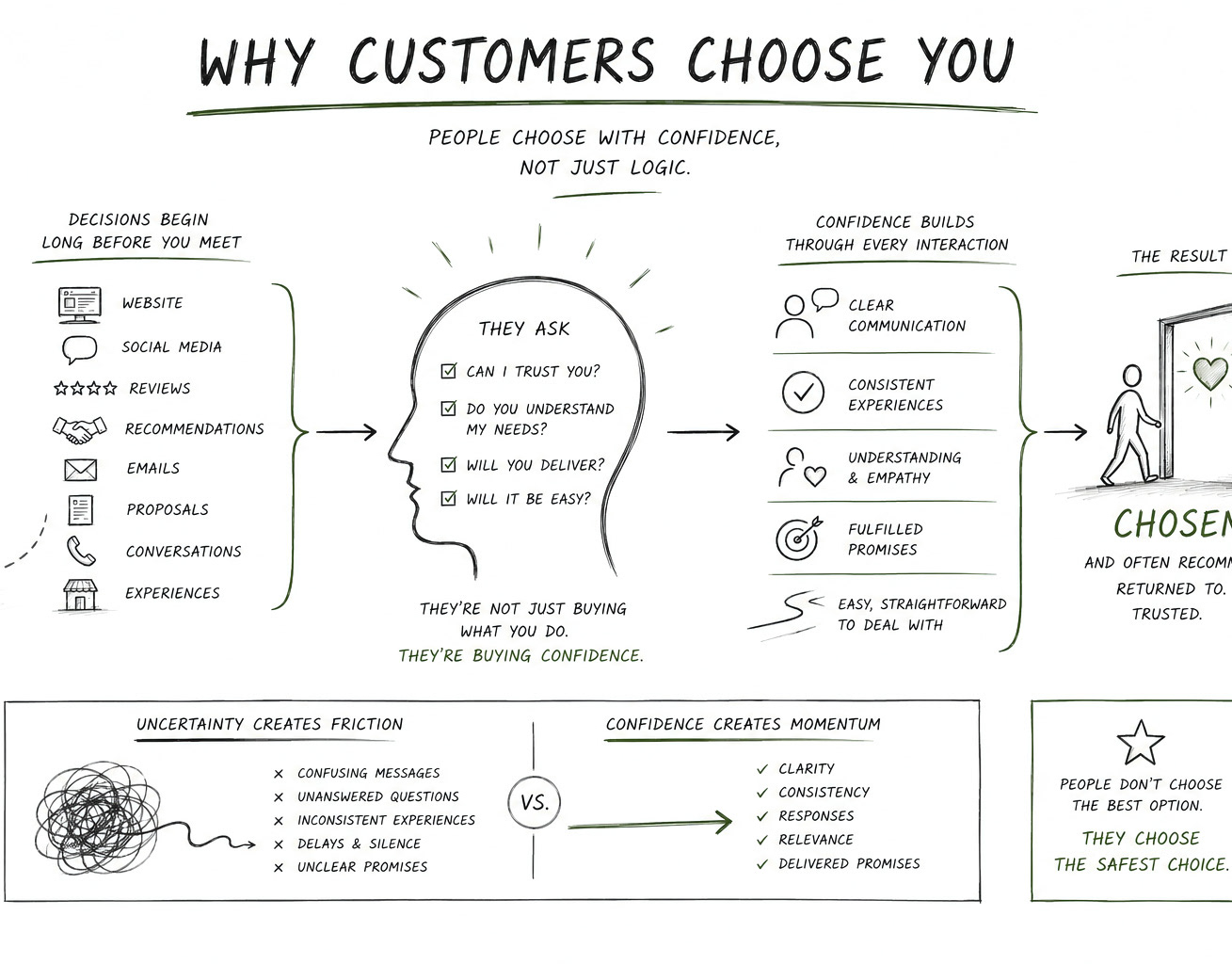
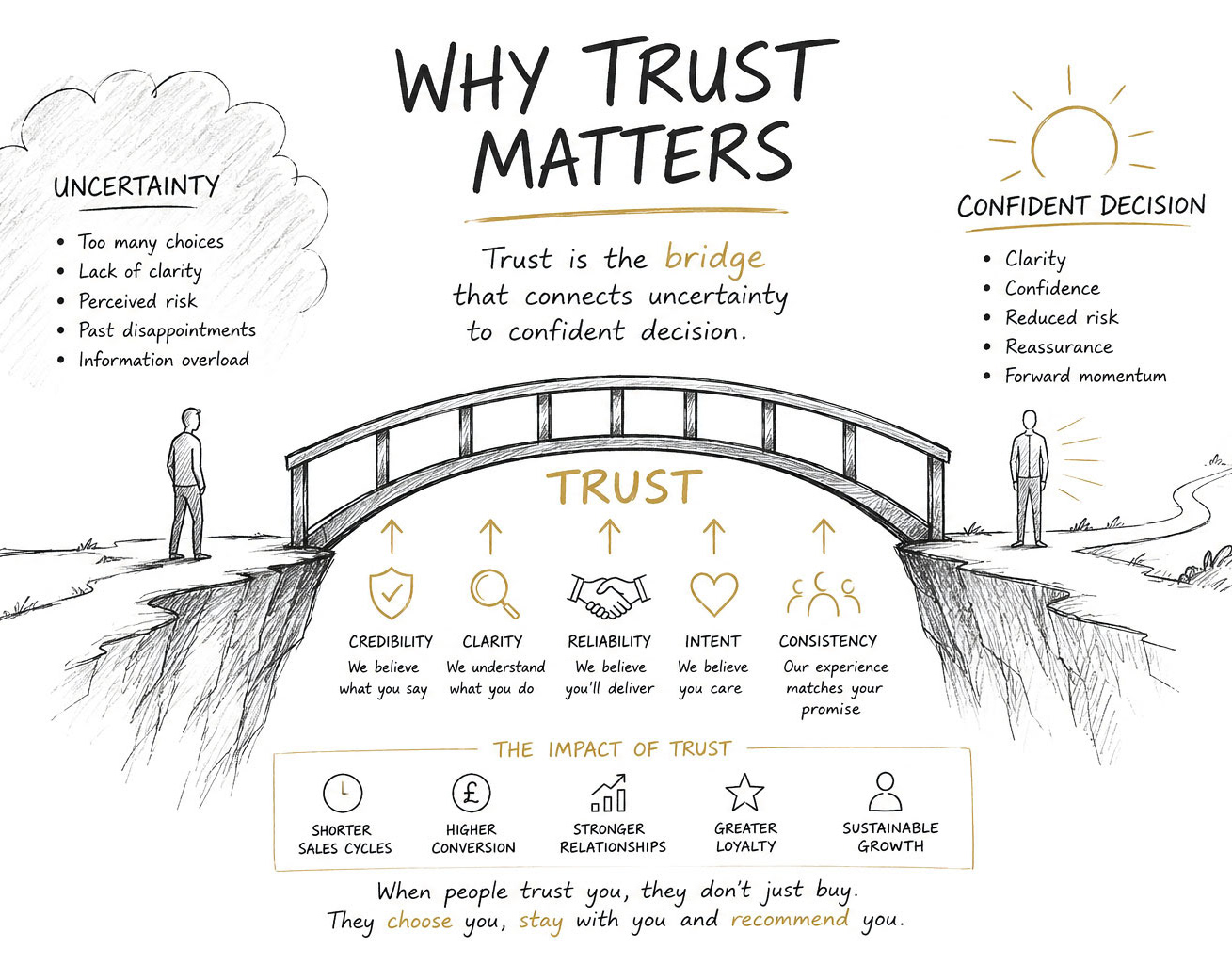
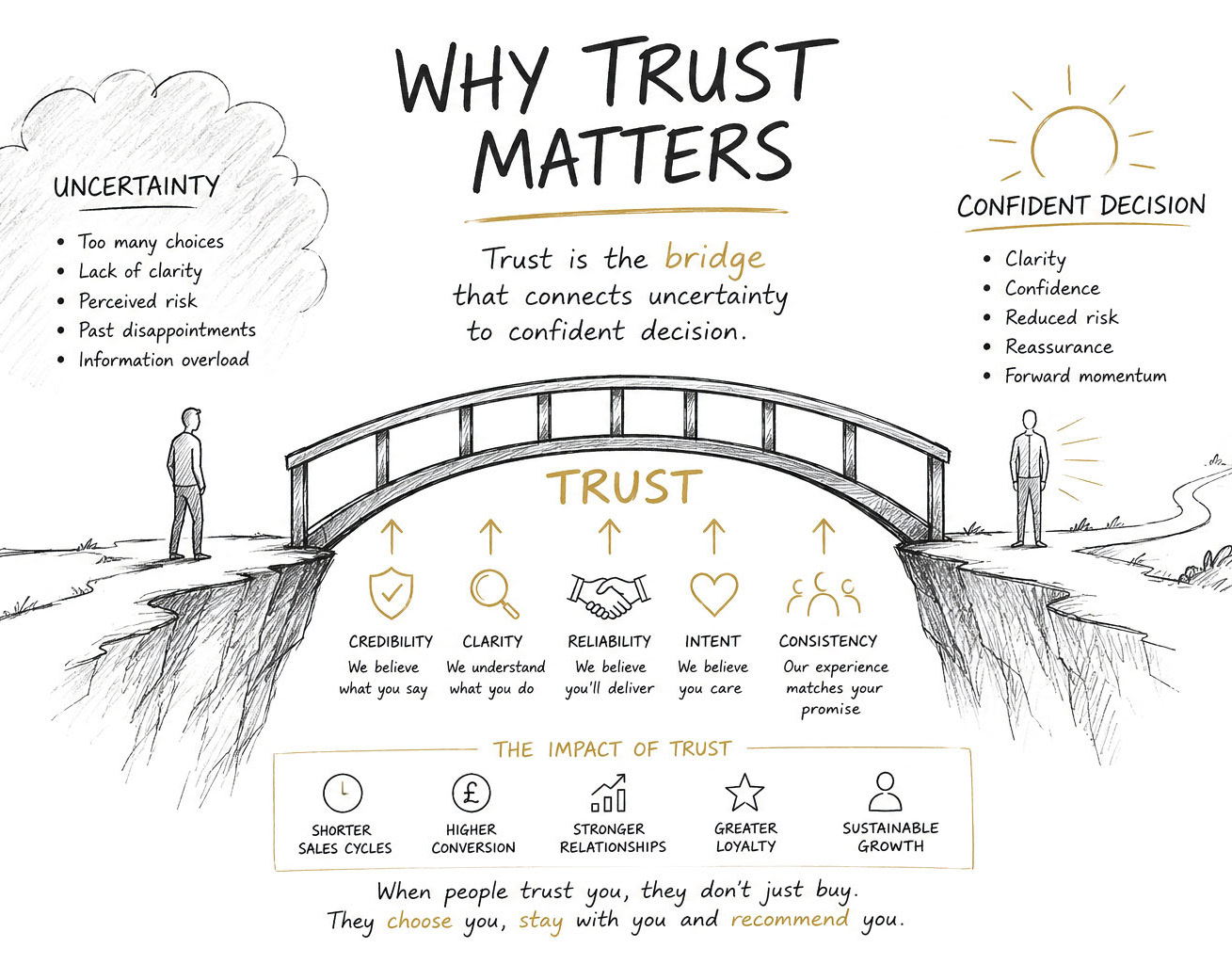
In today’s marketplace, people have more choice than ever before. Products and services can often appear similar, prices can easily be compared and competitors are only a click away. When customers are faced with uncertainty, they naturally become cautious. They delay decisions, seek reassurance or choose the organisation that feels most credible.
Trust is what removes that uncertainty.
It is the confidence that a business understands its customers, communicates honestly and consistently delivers on its promises. Trust is not created by clever marketing alone. It is earned through every interaction a customer has with an organisation.
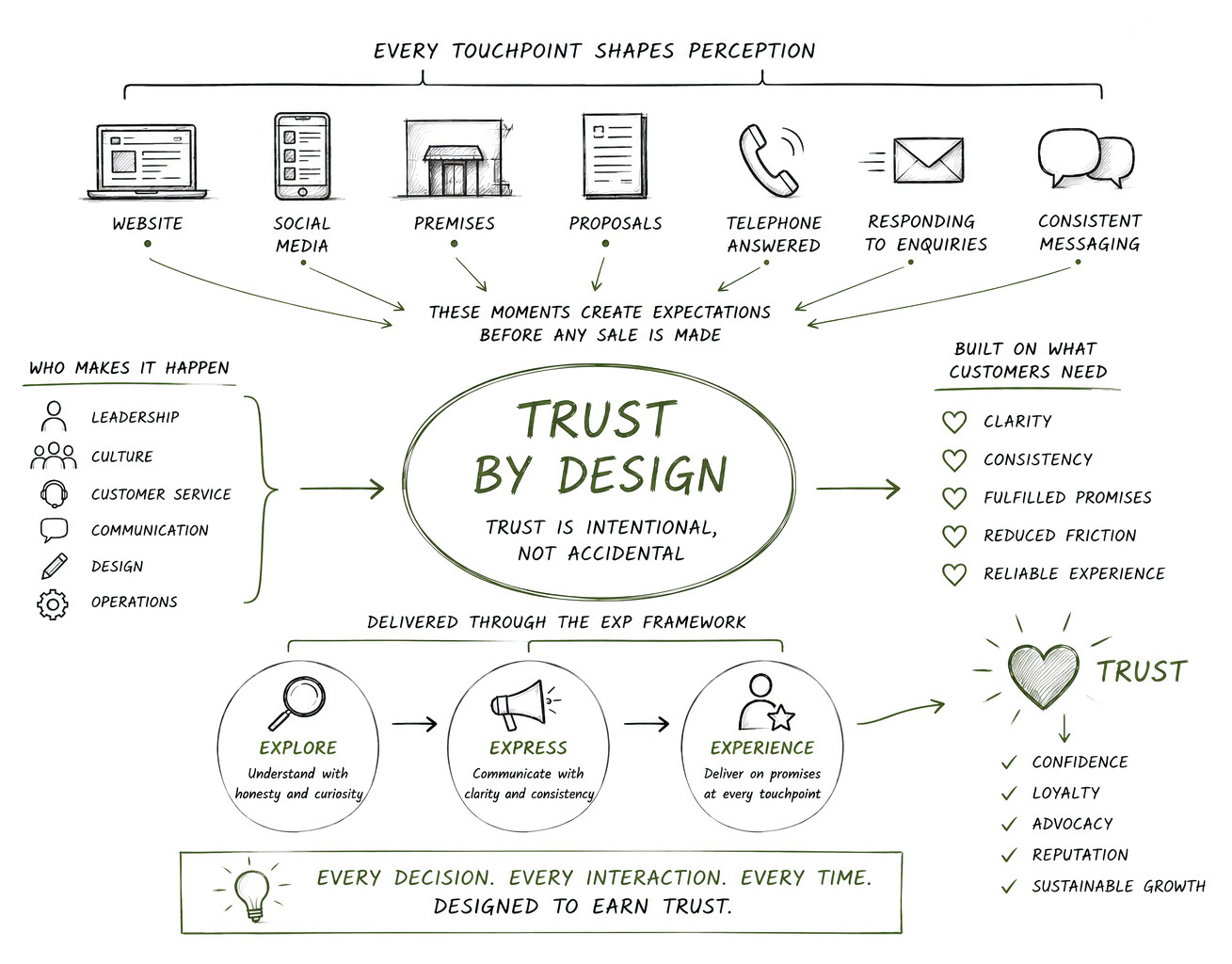
This belief forms the foundation of The EXP Framework — a practical business methodology built around three simple but powerful stages: Explore, Express and Experience.
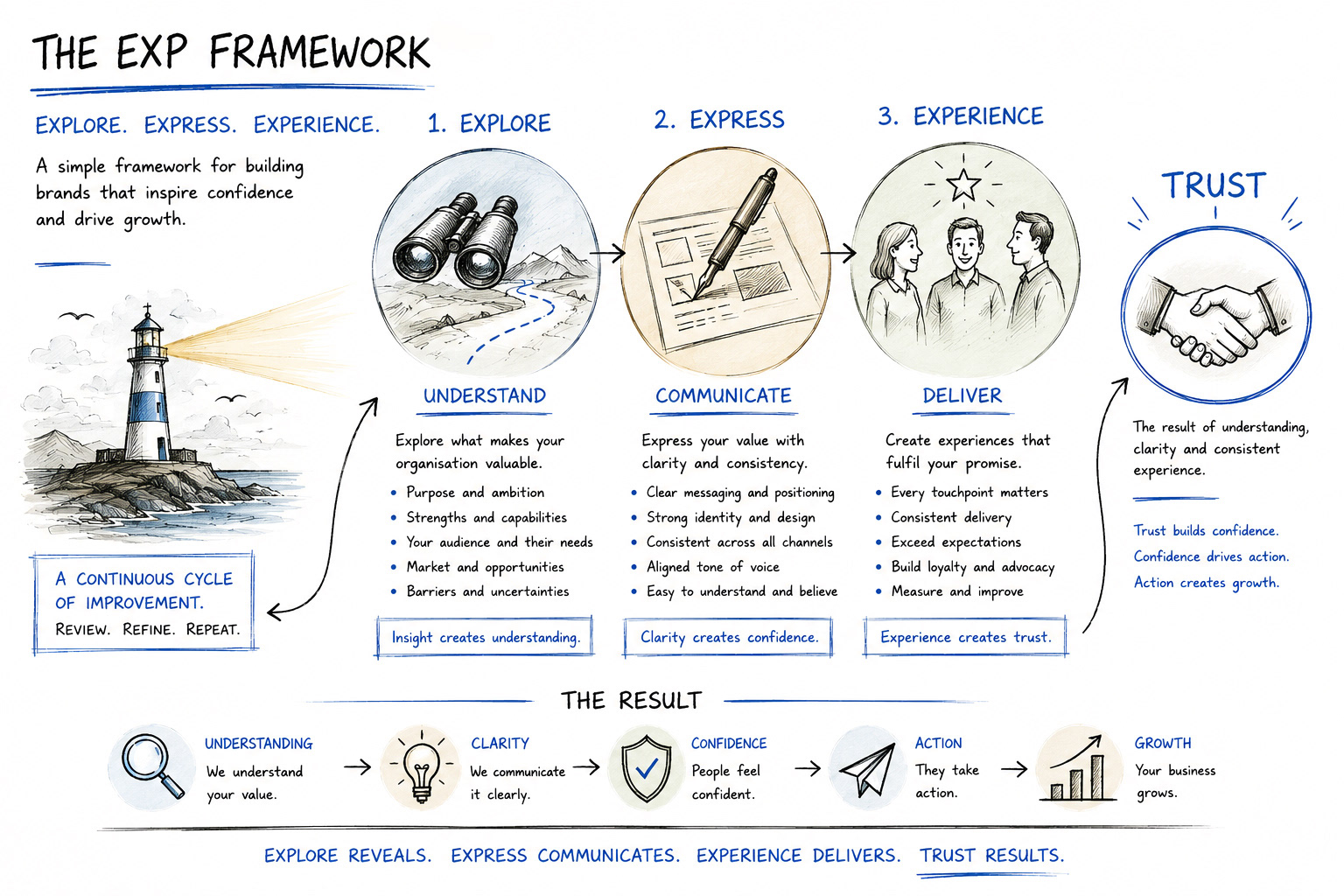
The framework is designed to help organisations discover what truly makes them valuable, communicate that value with clarity and create customer experiences that consistently reinforce trust. While it naturally supports branding and design, it extends far beyond visual identity. It influences leadership, culture, customer service, communication, marketing and every touchpoint that shapes perception.
At its heart, the EXP Framework is about creating organisations that people feel confident choosing.
Explore
Every successful journey begins with understanding.
Too often businesses rush towards solutions before they have fully understood the questions. They commission a new logo before defining their positioning, redesign a website without understanding customer behaviour or launch marketing campaigns without first identifying what genuinely differentiates them from their competitors.
The first stage of the EXP Framework is therefore to explore.
Exploration is not simply research. It is the process of uncovering insight. It means taking time to understand the organisation’s purpose, ambitions, culture and expertise. It involves listening carefully to customers, identifying what influences their decisions and recognising the barriers that prevent them from acting with confidence.
It is equally important to explore the customer journey. How do people first discover the organisation? What questions do they ask? Where do they hesitate? Which moments create reassurance and which create uncertainty?
Only by exploring these areas can an organisation begin to understand where trust is being built and where it is being lost.
This stage often reveals opportunities that were previously hidden in plain sight. Organisations frequently possess remarkable strengths that they have simply forgotten to communicate or have come to regard as ordinary because they experience them every day.
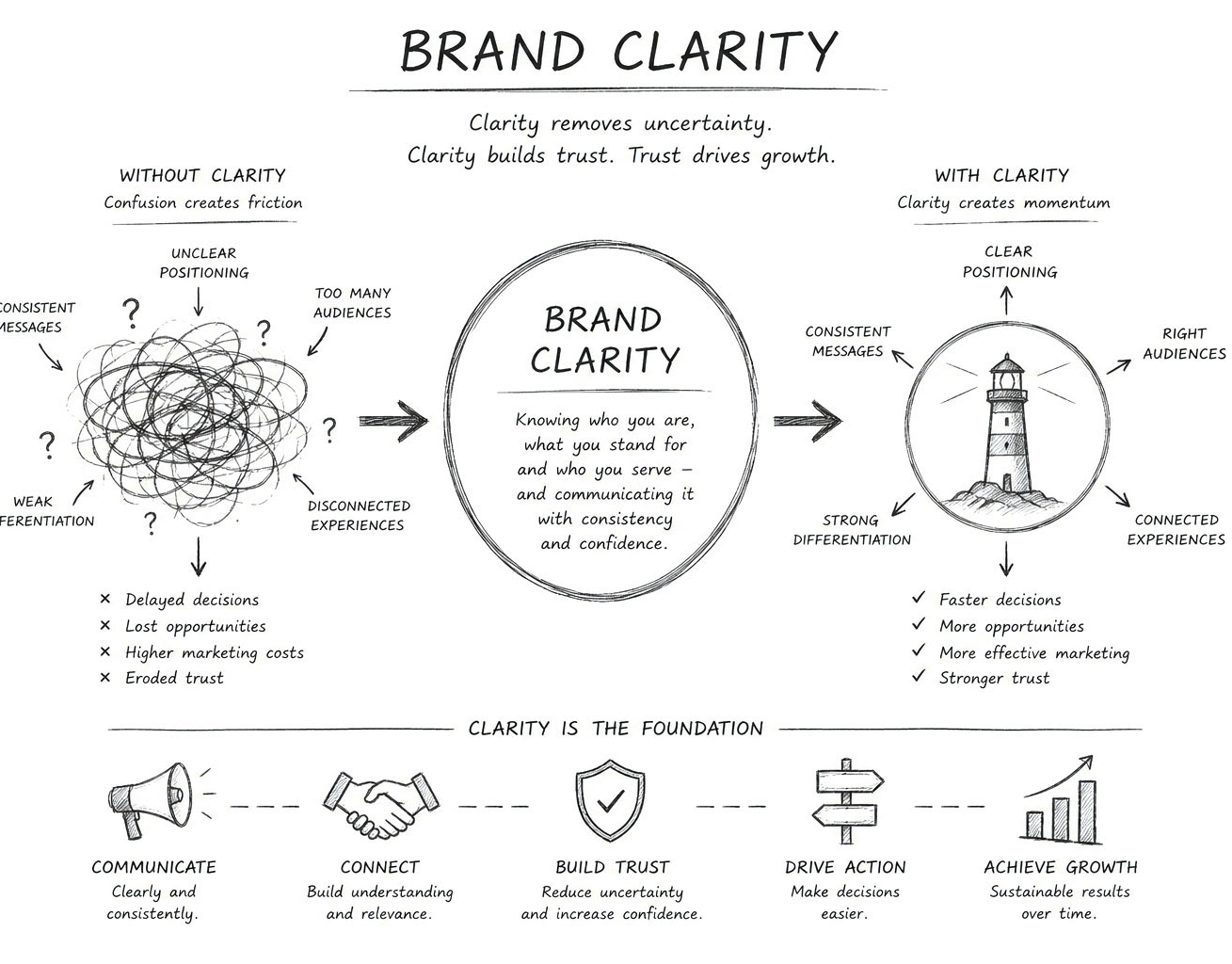
Exploration provides clarity.
And clarity is the foundation of trust.
Express
Once an organisation understands what makes it valuable, it must communicate that value clearly and consistently.
Many businesses have excellent products and services but struggle to express them in a way that customers immediately understand. Their messaging becomes inconsistent, their visual identity lacks focus or different parts of the organisation communicate in different ways. As a result, customers receive mixed signals, creating uncertainty rather than confidence.
The second stage of the framework is about expression.
This includes visual identity, language, tone of voice, presentations, proposals, websites, social media, exhibitions, printed communications and every interaction that influences perception. More importantly, it ensures that each of these elements communicates the same underlying message.
Effective communication is not about saying more. It is about saying what matters with clarity and consistency.
When organisations express themselves well, customers no longer need to work hard to understand who they are or why they should choose them. Confidence begins to replace uncertainty, making decisions easier and relationships stronger.
Strong brands are not those that shout the loudest.
They are the ones that communicate with the greatest clarity.
Experience
Ultimately, however, a brand is never defined by its marketing alone.
It is defined by what people experience.
Every promise made through branding must be confirmed through action. Every meeting, telephone conversation, email, proposal, purchase, delivery, installation, invoice and follow-up contributes to the customer’s perception of the organisation. Each interaction either reinforces trust or quietly weakens it.
This is why the final stage of the EXP Framework focuses on experience.
Customer experience is where strategy becomes reality. It is where values are demonstrated rather than described. It is where reputation is built, one interaction at a time.
Exceptional customer experiences are rarely the result of chance. They are carefully designed, consistently delivered and continually refined. They reflect an organisation that understands what its customers value and has aligned every part of the business to deliver it.
When this happens, trust grows naturally.
Customers become advocates. They return. They recommend the organisation to others. Price becomes less significant because confidence has become more valuable than cost.
The experience confirms that the promises made during the earlier stages were genuine.
It transforms belief into loyalty.
Building Trust by Design
Although the EXP Framework consists of three distinct stages, they are united by one simple principle.
Trust.
Exploring creates understanding.
Expressing creates clarity.
Experiencing creates confidence.
Together they build trust.
This is why branding should never be viewed as simply creating attractive graphics or memorable logos. True branding is the deliberate design of trust across every part of an organisation. It is about ensuring that what people see, hear and experience consistently reflects the values and capabilities of the business behind it.
Organisations that build trust do not simply communicate more effectively. They reduce uncertainty. They shorten decision-making. They strengthen customer relationships. They encourage recommendations and create loyalty that competitors struggle to replicate.
Products may be copied. Services may evolve. Technology may change.
Trust remains one of the few genuine competitive advantages that cannot be easily imitated.
The EXP Framework provides a structured way to build that advantage.
By exploring what truly matters, expressing it with clarity and creating experiences that consistently reinforce confidence, organisations build brands that are remembered not simply because they looked good, but because people trusted them.
In the end, that is what every successful brand is really trying to achieve.
Not attention.
Not admiration.
But trust.
Because trust is the foundation of confidence.
And confidence is what turns interest into action, customers into advocates and organisations into lasting success.
___________________________________________
by David Clare FRSA
Founder, Exposed Design Consultants
Founder, Exposed Design Consultants
“The Journal is a collection of ideas developed through more than 35 years of working with organisations across retail, education, heritage, corporate and not-for-profit sectors. Every article explores one simple belief: when uncertainty is reduced, confidence grows; when confidence grows, trust follows; and when trust exists, organisations are far better placed to succeed.”
Trust by Design.