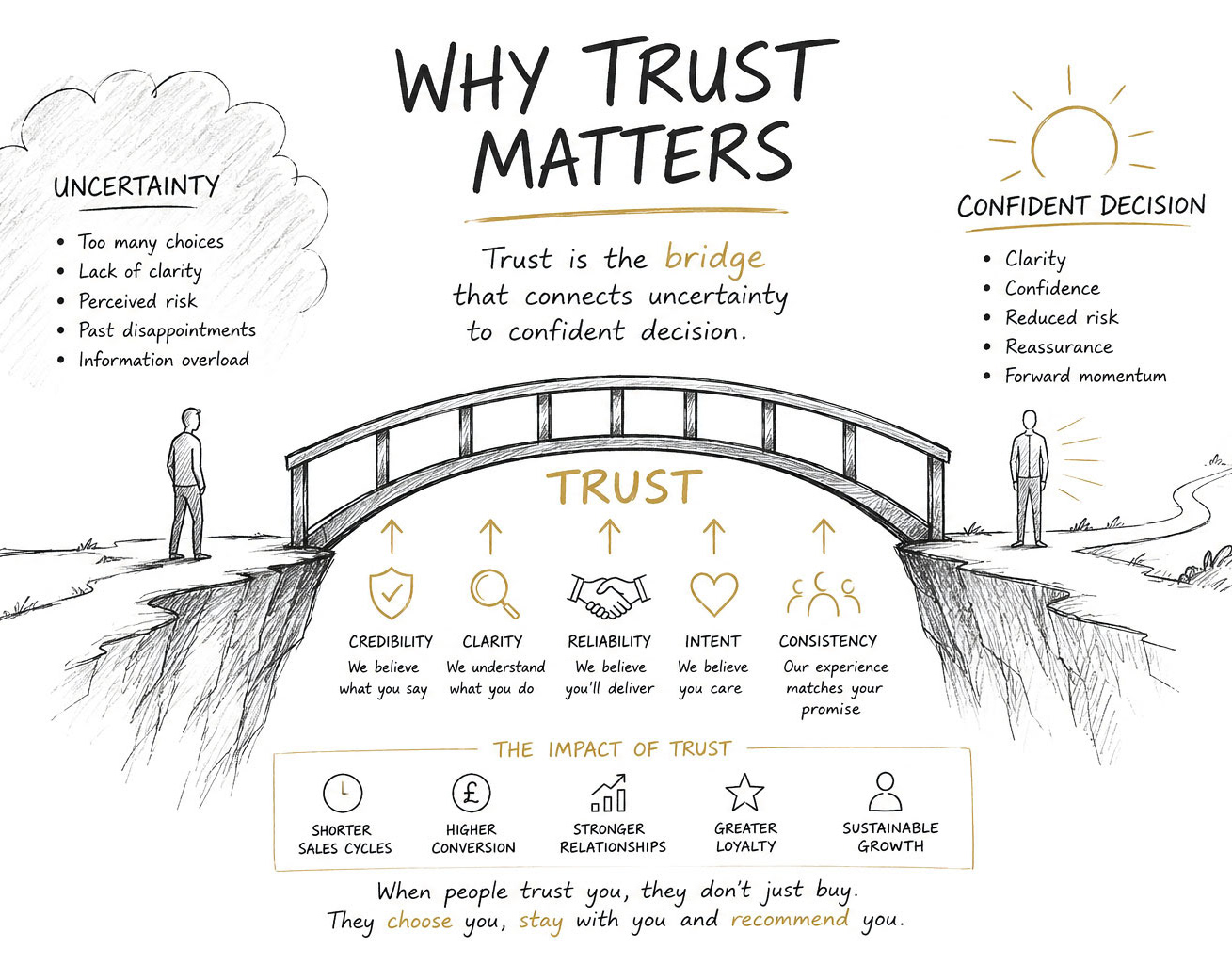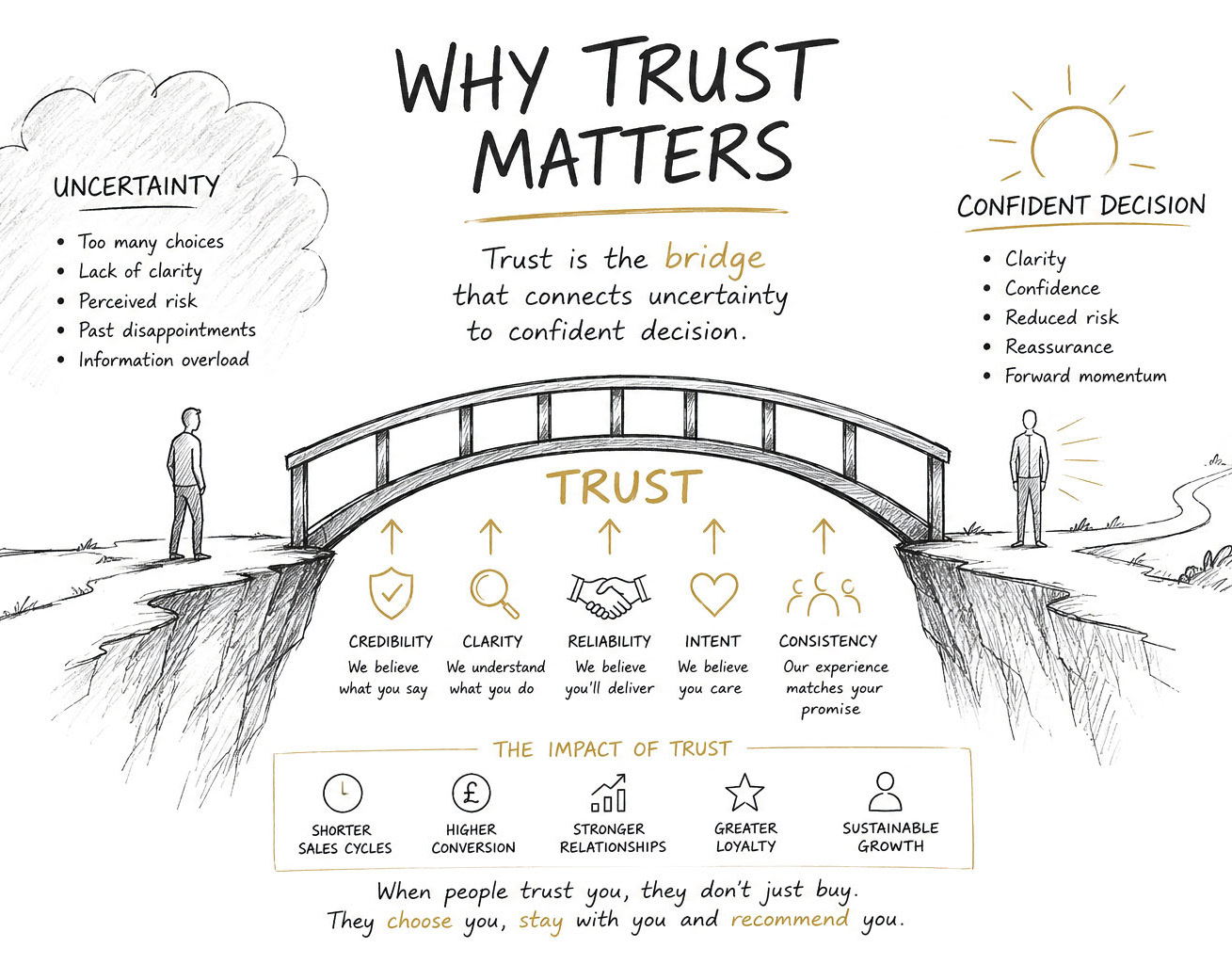
Trust is often spoken about as though it were something intangible.
We describe people as trustworthy, businesses as trusted and brands as trusted names, yet we rarely stop to consider how that trust was created in the first place.
It is tempting to believe that trust develops naturally over time, emerging as a by-product of experience or reputation. Whilst there is certainly some truth in that, it overlooks a more important reality. The organisations that consistently earn trust are rarely relying on chance. More often than not, they have designed their businesses in ways that make trust the inevitable outcome.
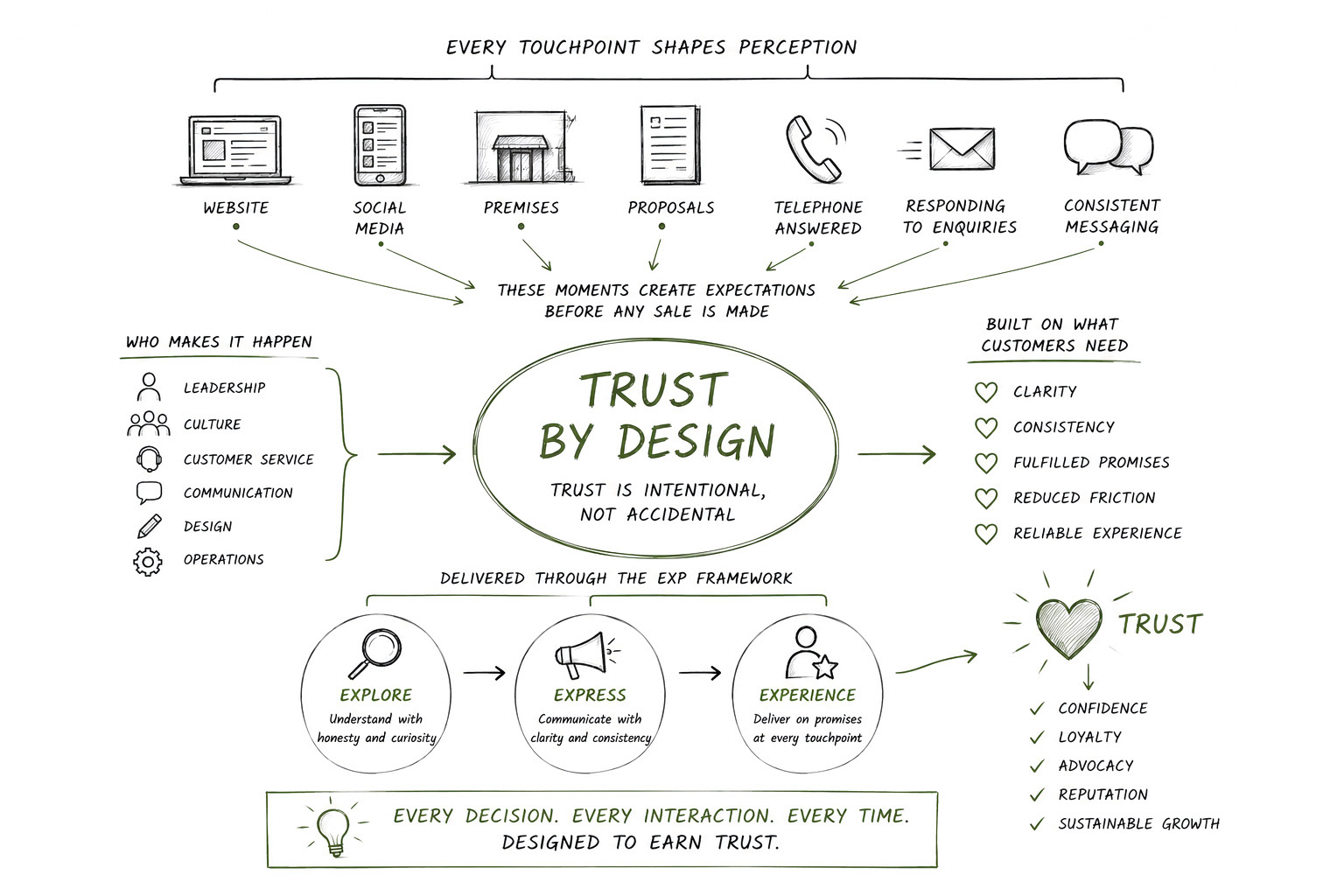
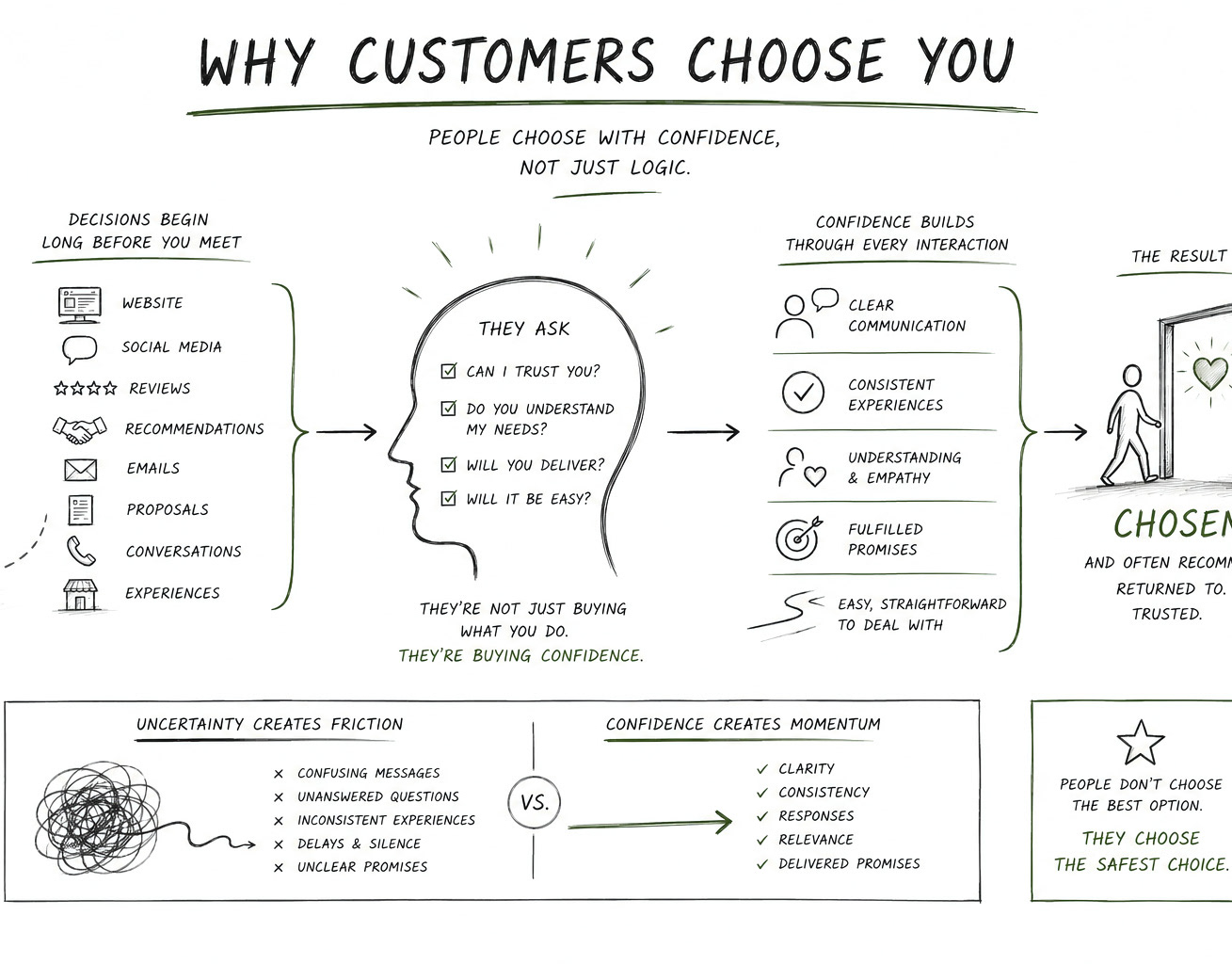
Every organisation communicates long before anyone becomes a customer. Its website, its social media, its premises, its proposals, the way the telephone is answered, the speed of responding to enquiries and the consistency of its messaging all begin to shape perception. Individually, these moments may appear insignificant, but collectively they create an expectation of what it will be like to work with that organisation. Before a product is purchased or a service is delivered, trust is already beginning to form.
This is why trust should never be viewed as the responsibility of the sales team or the marketing department alone. Trust belongs to the entire organisation. It is influenced by leadership, culture, customer service, communication, design, operational standards and every decision that affects the customer experience. When viewed in this way, trust becomes something that can be intentionally created rather than simply hoped for. That is what I mean by Trust by Design.
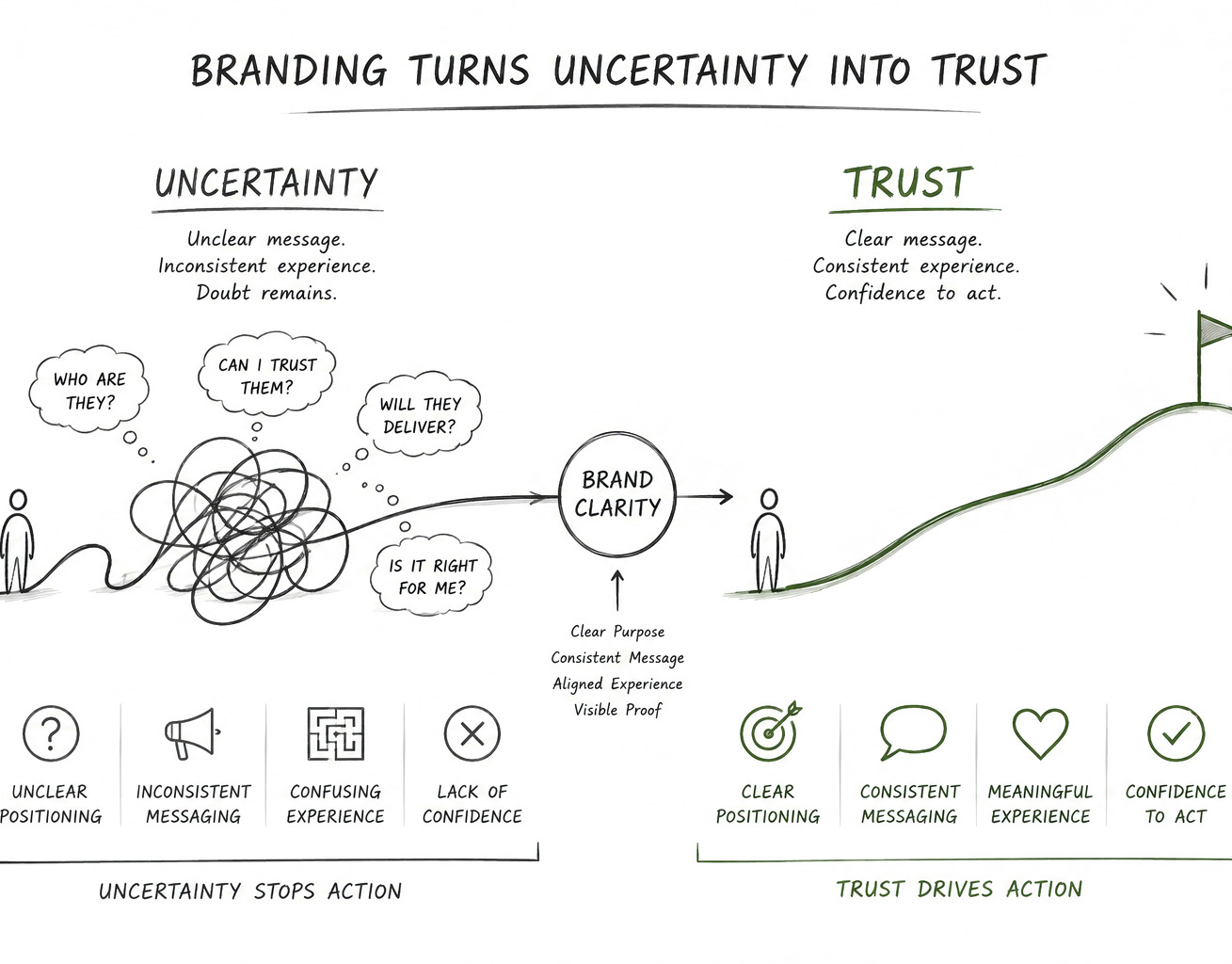
Throughout my career, I have worked with organisations across retail, education, heritage, professional services and the charitable sector. Although their objectives differed, they all faced a remarkably similar challenge. They needed people to choose them with confidence. Whether encouraging customers to buy a product, parents to select a school, donors to support a campaign or organisations to appoint a consultant, the underlying question remained the same. How do we remove uncertainty and create sufficient confidence for someone to take the next step?
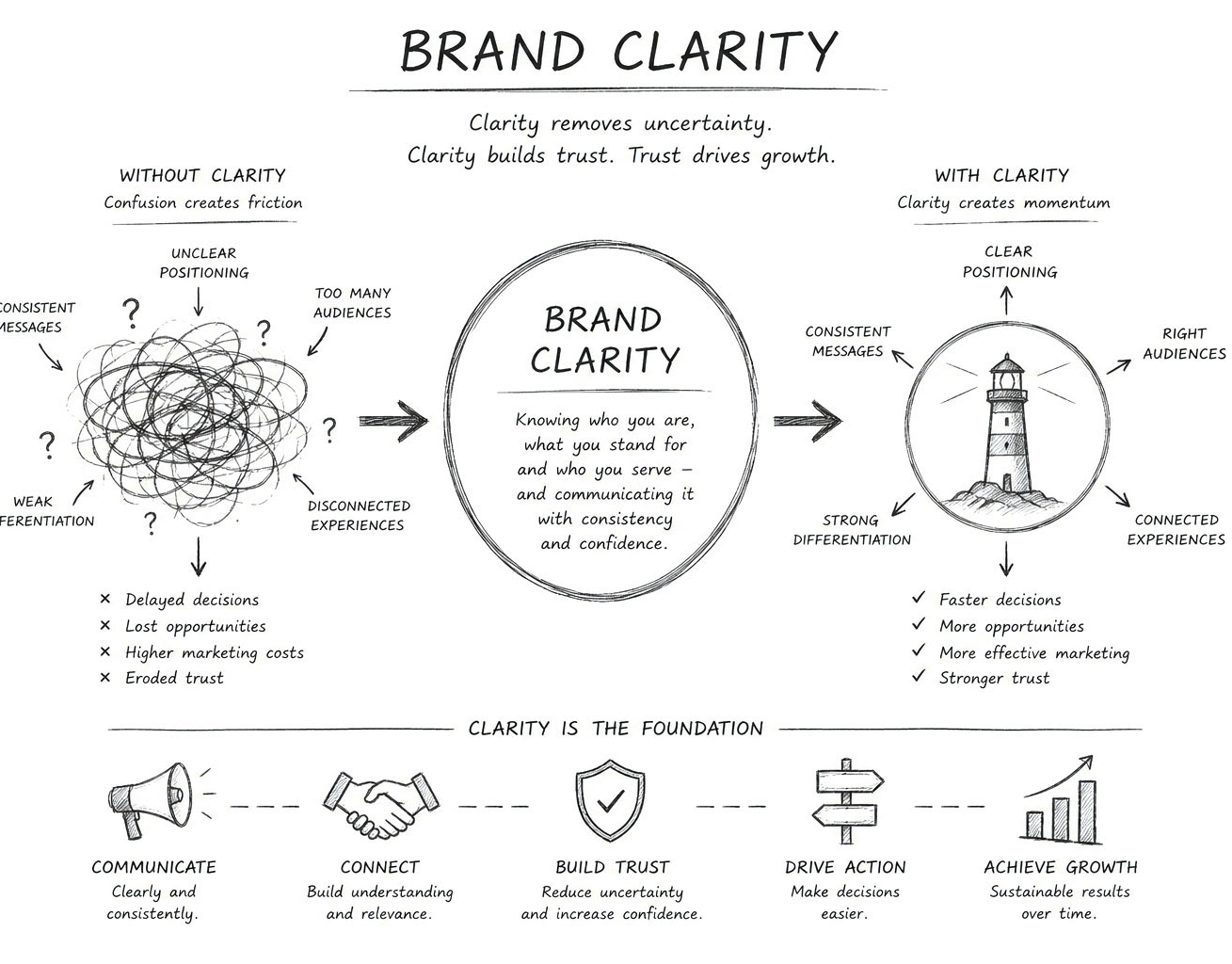
The answer is rarely found in louder marketing or more persuasive selling. It is found in reducing uncertainty. Customers want to understand who you are, what you stand for and why you are the right choice. They want consistency between what they read online and what they experience in person. They want promises that are fulfilled rather than exaggerated claims that disappoint. Every unanswered question, every inconsistency and every unnecessary complication introduces friction into the decision-making process. Conversely, every moment of clarity strengthens confidence.
This is where branding plays an important role, although perhaps not in the way it is traditionally understood. Branding is often associated with logos, colours and visual identity, yet these are simply visible expressions of something much deeper. A strong brand is the result of organisational clarity. It reflects a clear purpose, a consistent culture and a shared understanding of the value being offered. Good branding does not create trust on its own, but it gives trust a visible and recognisable form.
Equally important is the experience that follows. Customers judge organisations not by what they promise but by what they consistently deliver. A beautifully designed website, followed by poor communication quickly destroys confidence. An inspiring presentation undermined by missed deadlines leaves a lasting impression for all the wrong reasons. Trust is built when experience consistently reinforces expectation. The strongest organisations understand that every interaction either confirms or weakens the promise their brand has made.
Retail has long understood this principle. Successful retailers design stores that feel intuitive, informative and reassuring because they know customers are constantly making judgements about quality, value and reliability. The same thinking applies to every organisation. A charity should inspire confidence in the stewardship of donations. A school should reassure parents that their children will flourish. A professional practice should demonstrate competence and reliability from the very first enquiry. Although the contexts are different, the principle remains identical. Every experience should reduce uncertainty rather than increase it.
Trust by Design, therefore, requires organisations to think differently about the customer journey. Instead of asking, "How do we persuade people to buy?", a better question is, "What do people need to experience in order to feel confident?" This subtle shift changes the entire conversation. It moves attention away from promotion and towards understanding. It encourages organisations to remove obstacles, simplify decisions and create experiences that naturally lead to confidence.
This philosophy also changes the role of design itself. Design is no longer simply about making something attractive. It becomes a strategic tool for making organisations easier to understand, easier to engage with and easier to trust. Every visual decision, every piece of language, every process and every customer interaction contributes towards the same objective. Design becomes the discipline through which trust is made visible.
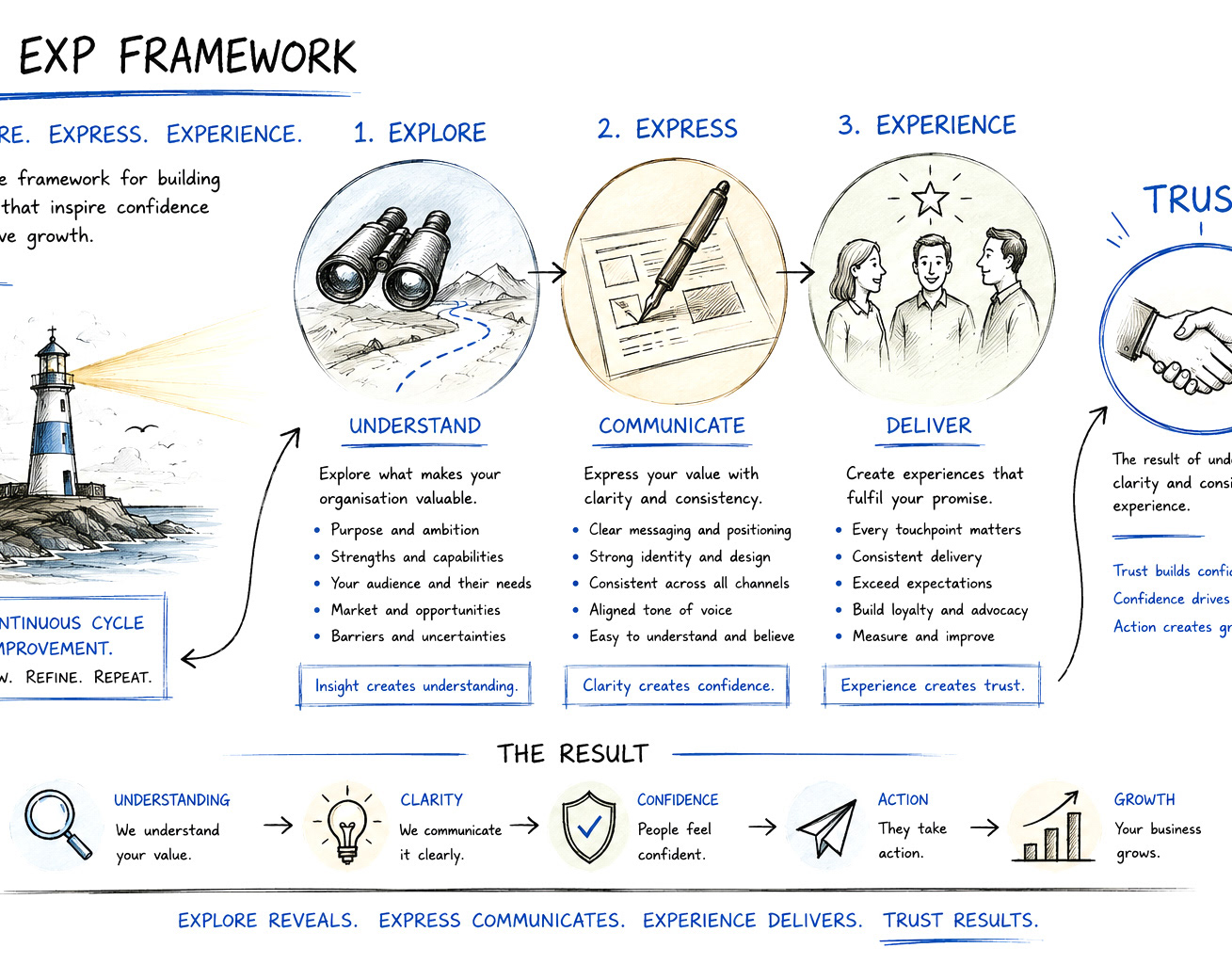
Over time, this thinking evolved into the EXP Framework, a practical structure for helping organisations build trust intentionally. It begins by exploring the organisation with honesty and curiosity, expressing its purpose with clarity and consistency, and ensuring that customers genuinely experience the promises being made. The framework is not an end in itself. It is simply a practical means of putting the philosophy of Trust by Design into action.
In an increasingly competitive marketplace, products can be copied, technologies evolve rapidly, and prices fluctuate constantly. Trust, however, remains remarkably resilient. It is earned slowly, protected carefully and strengthened through every positive experience. Organisations that understand this do more than build successful brands. They build lasting relationships, loyal customers and reputations that continue to grow long after individual marketing campaigns have been forgotten.
Perhaps that is why Trust by Design feels more relevant today than ever before. We live in an age of almost unlimited choice, where information is abundant but confidence is often scarce. In such an environment, the organisations that thrive will not necessarily be those that shout the loudest or spend the most. They will be those that make it easiest for people to believe, to decide and to move forward with confidence.
Trust is not an accident. It is not a fortunate consequence of success. It is a deliberate outcome of understanding people, communicating clearly and consistently delivering on every promise made. That is Trust by Design, and I believe it is one of the most powerful competitive advantages any organisation can create.
___________________________________________
by David Clare FRSA
Founder, Exposed Design Consultants
Founder, Exposed Design Consultants
“The Journal is a collection of ideas developed through more than 35 years of working with organisations across retail, education, heritage, corporate and not-for-profit sectors. Every article explores one simple belief: when uncertainty is reduced, confidence grows; when confidence grows, trust follows; and when trust exists, organisations are far better placed to succeed.”
Trust by Design.