Every organisation likes to believe that customers choose them because they offer the best product, the most competitive price or the highest level of expertise.
Whilst these factors undoubtedly influence decisions, they rarely tell the whole story.
If they did, the organisation with the greatest technical capability would always win, the cheapest supplier would dominate every market and purchasing decisions would be entirely rational. Experience tells us that this simply is not the case.
People make decisions in a far more complex way. Before comparing specifications, reviewing prices or assessing technical expertise, they are already forming opinions. They are asking themselves questions that are often never spoken aloud. Can I trust this organisation? Do they understand my needs? Will they deliver what they promise? Will working with them be straightforward, or unnecessarily difficult? These questions are not simply about products or services. They are about confidence.
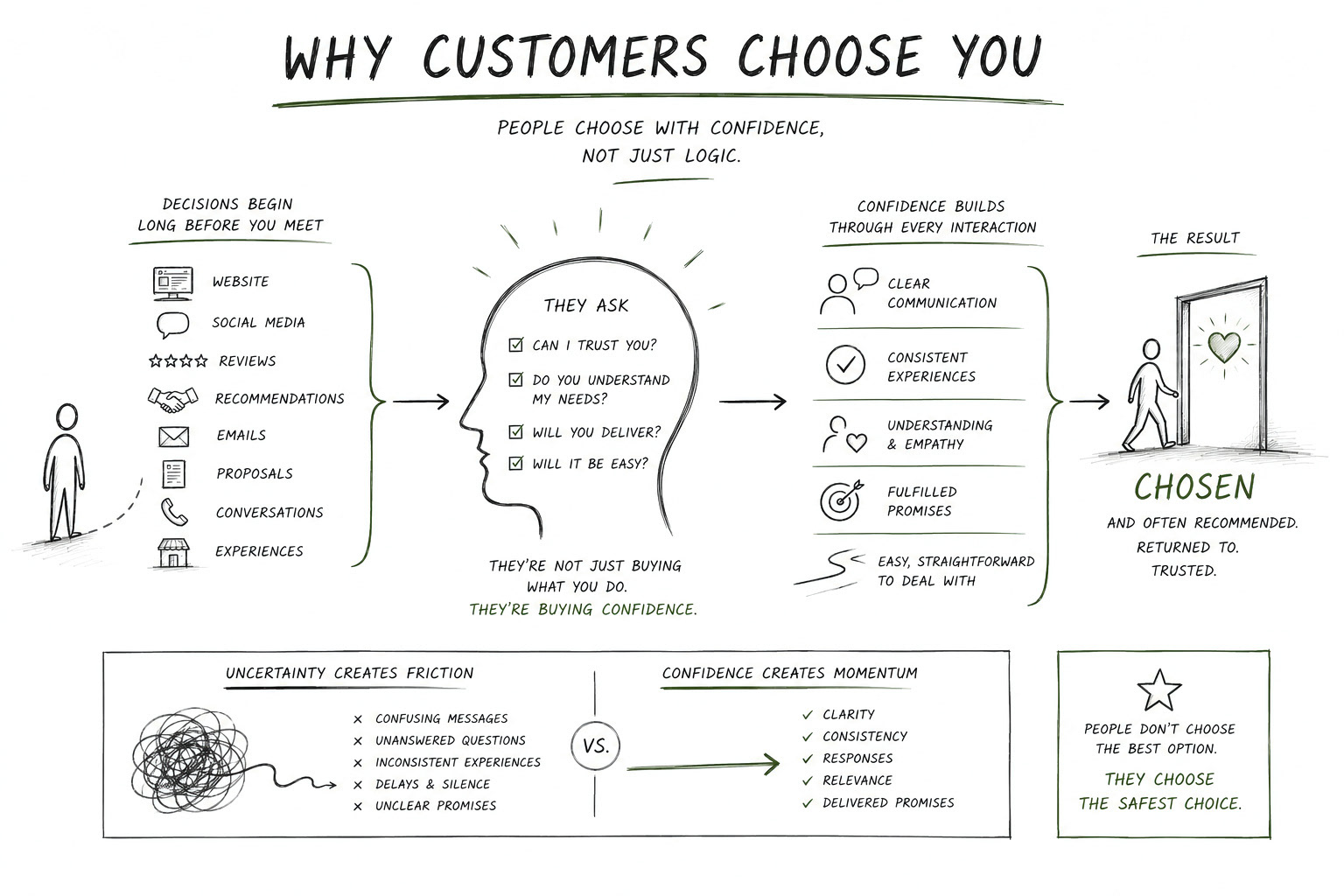
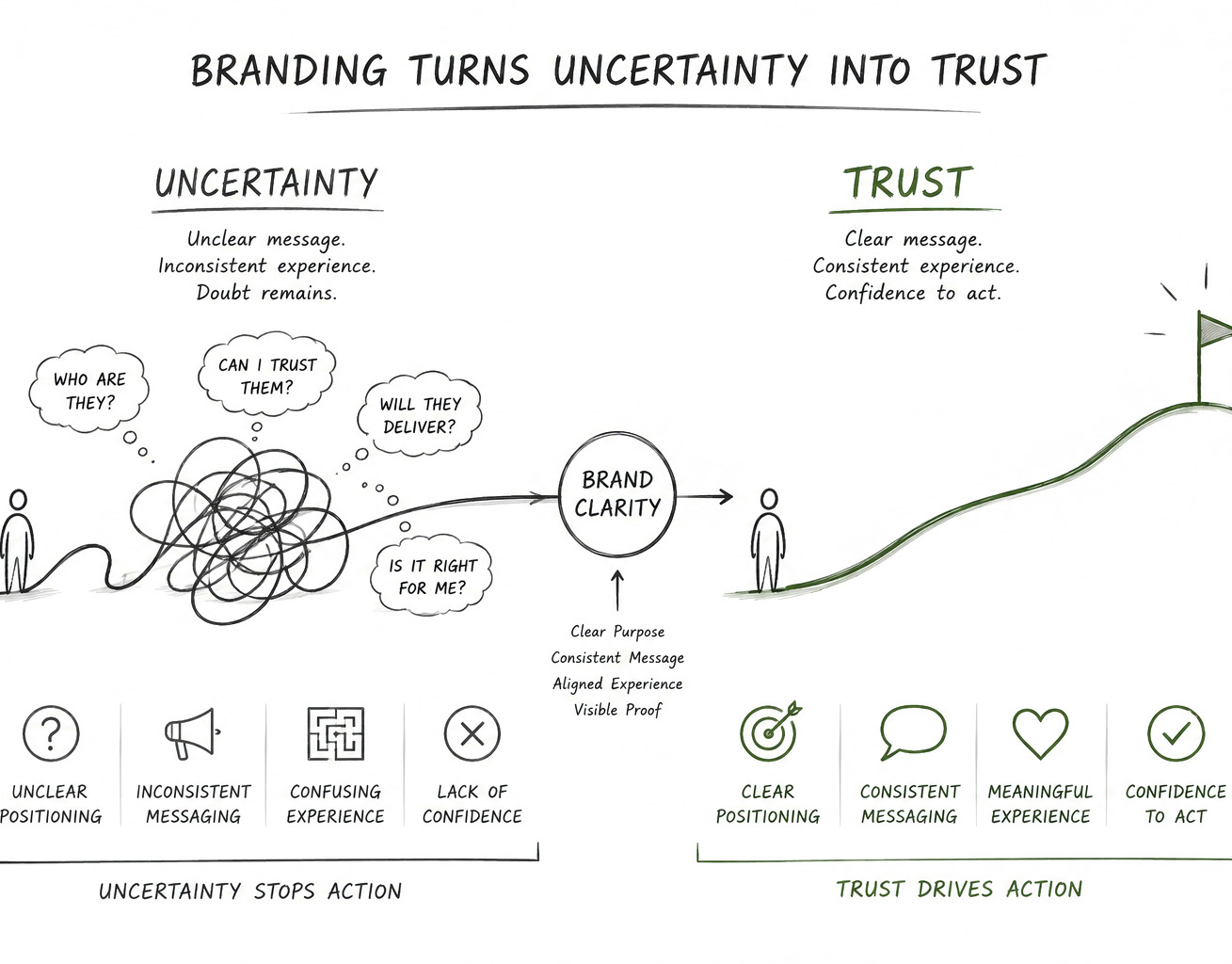
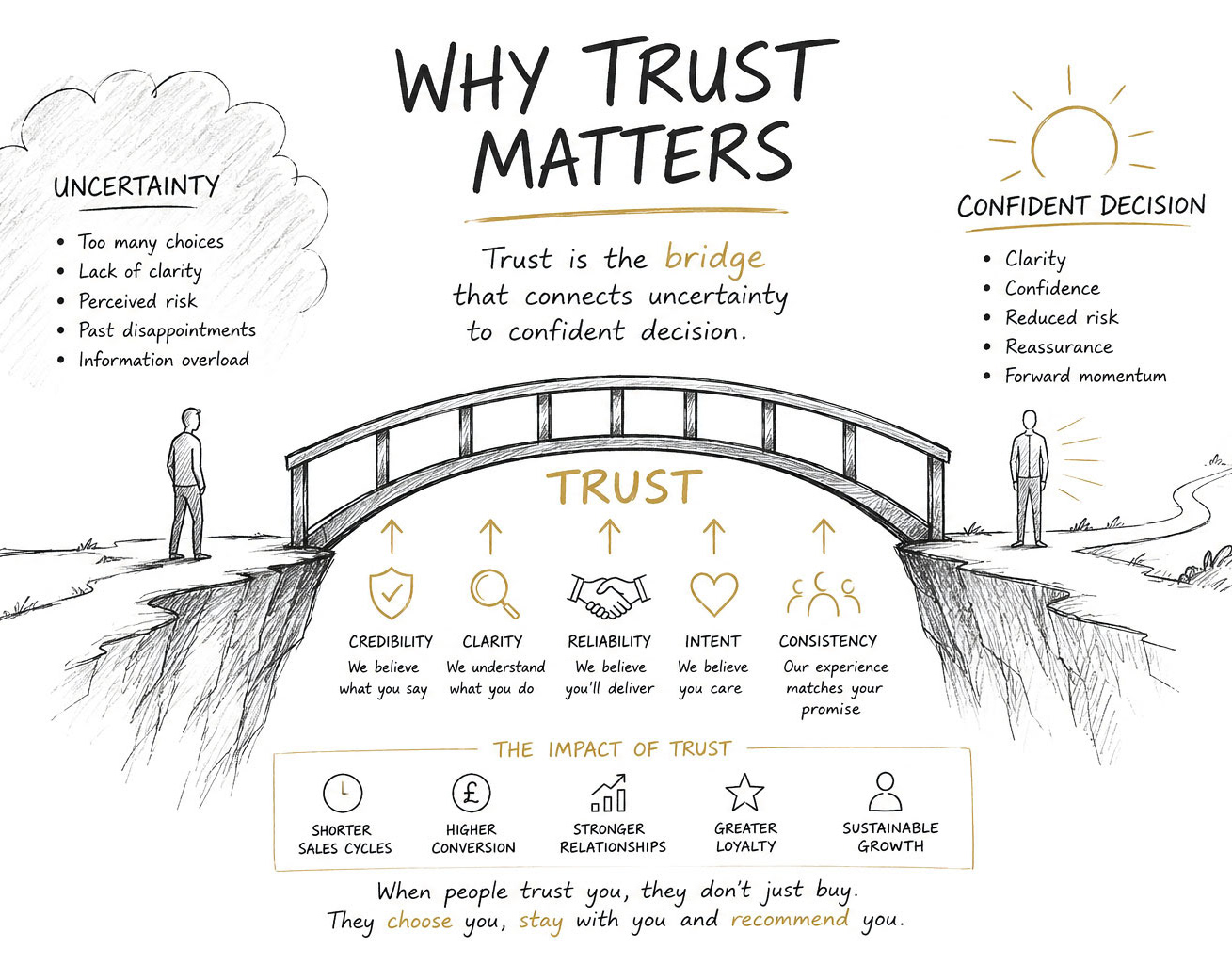
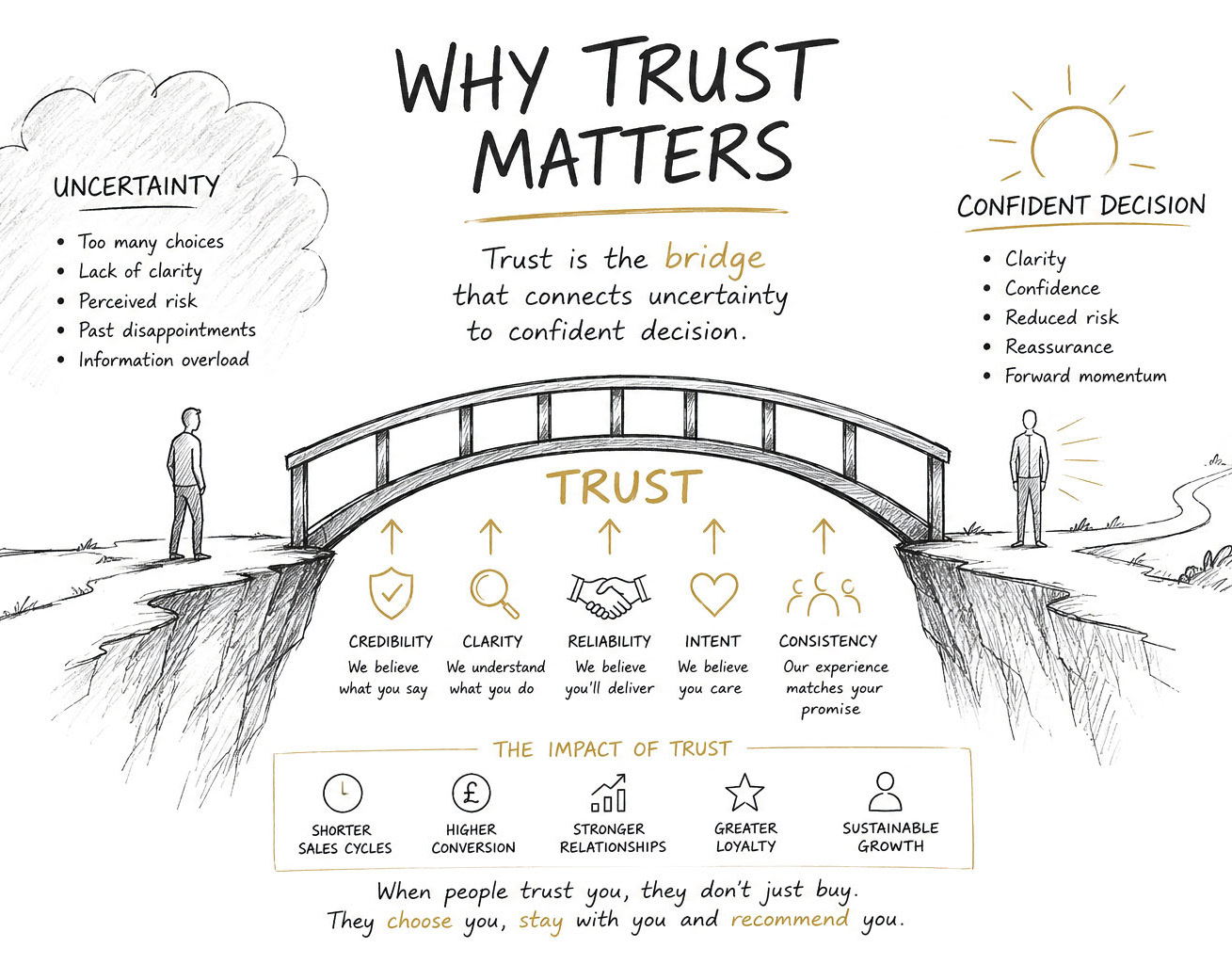
Throughout this Journal. I have explored how trust reduces uncertainty and how clarity makes decisions easier. Those ideas come together in one simple observation: customers do not choose organisations because they understand every detail of what they offer. More often, they choose the organisation that gives them the greatest confidence in the outcome. The decision is rarely about certainty that one organisation is objectively better than another. It is about feeling sufficiently confident to move forward.
This explains why first impressions matter so profoundly. Long before a conversation takes place, customers are already gathering evidence. A recommendation from a trusted colleague, a visit to a website, a LinkedIn profile, an online review, the quality of photography, the tone of written communication and the professionalism of a proposal all contribute to a picture that is gradually taking shape. Each interaction either reinforces confidence or introduces doubt. By the time a formal presentation or sales meeting takes place, much of the decision has already been influenced by everything that came before.
One of the most common misconceptions in business is that customers make decisions by carefully weighing every available option against a logical checklist. In reality, people often simplify complex decisions by looking for signals that reduce risk. They search for evidence that the organisation understands its own purpose, communicates consistently and appears capable of delivering what it promises. They notice whether messages align across different channels, whether questions are answered clearly and whether every interaction feels considered and professional. These seemingly small details become indicators of something much larger. They suggest how the organisation is likely to behave once the contract has been signed.
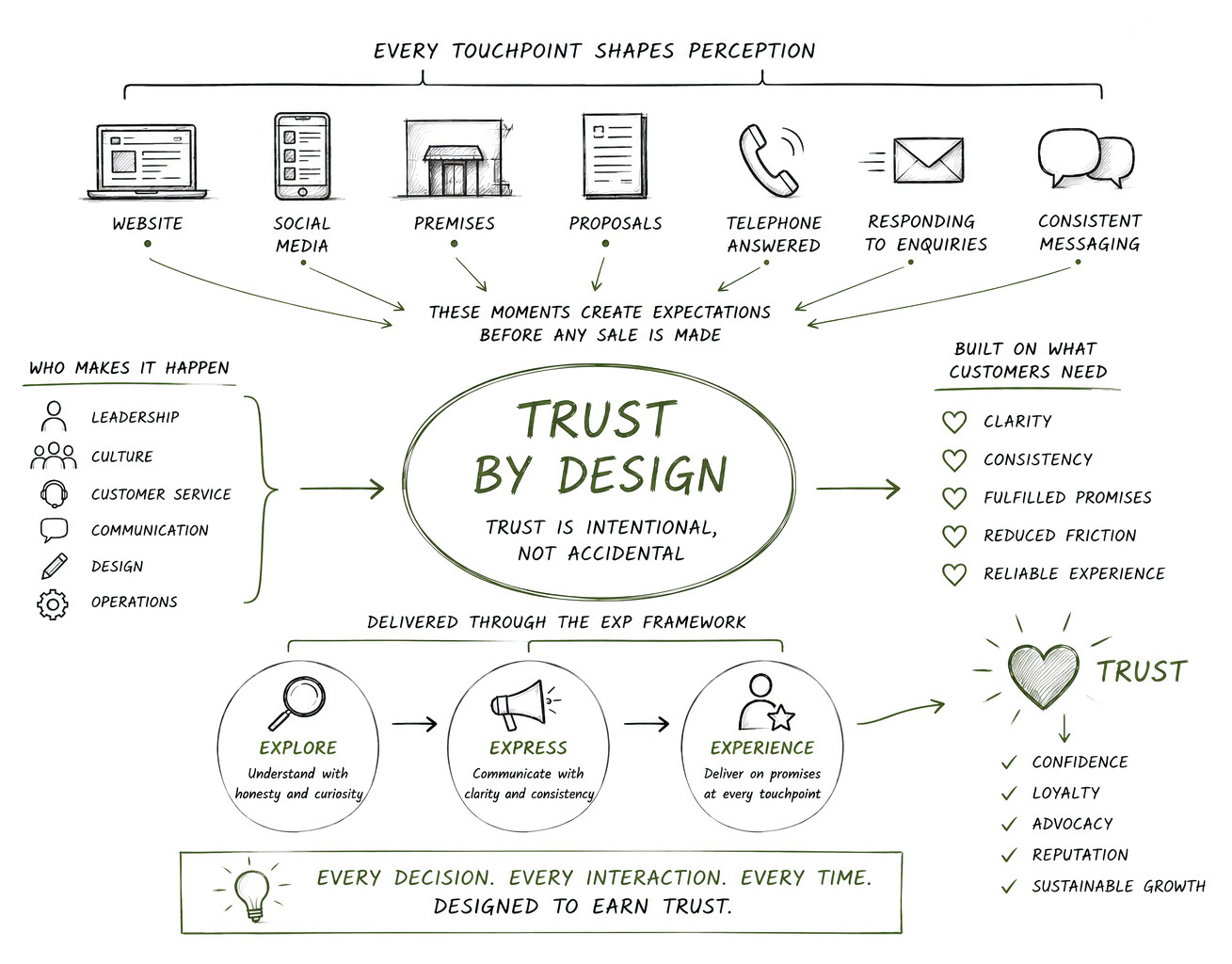
This is why trust cannot be separated from the customer experience. Every interaction becomes part of the decision-making process. An enquiry answered promptly demonstrates respect. A proposal that is easy to understand suggests clarity of thinking. A meeting that focuses on listening rather than simply selling conveys confidence rather than desperation. None of these moments guarantee success in isolation, yet together they create an impression that is remarkably difficult to ignore.
Retail has understood this principle for decades. Successful retailers know that customers judge far more than the products displayed on the shelves. They notice whether the store is welcoming, whether staff appear knowledgeable, whether prices are transparent and whether finding what they need feels straightforward. Every element contributes to confidence. Although the environment may be different, the same principle applies to every organisation. Whether choosing a school, appointing a solicitor, selecting an architect or commissioning a creative consultancy, people are constantly asking themselves one simple question: "Does this organisation feel like the right choice?"
Interestingly, the answer is rarely determined by dramatic differences between competitors. More often, it is influenced by the accumulation of small positive experiences. A clear message. A thoughtful follow-up email. Consistent branding. A recommendation from someone whose opinion is valued. A case study that feels relevant. These moments may seem insignificant when viewed individually, but together they create momentum. Confidence builds gradually until choosing one organisation begins to feel like the obvious next step.
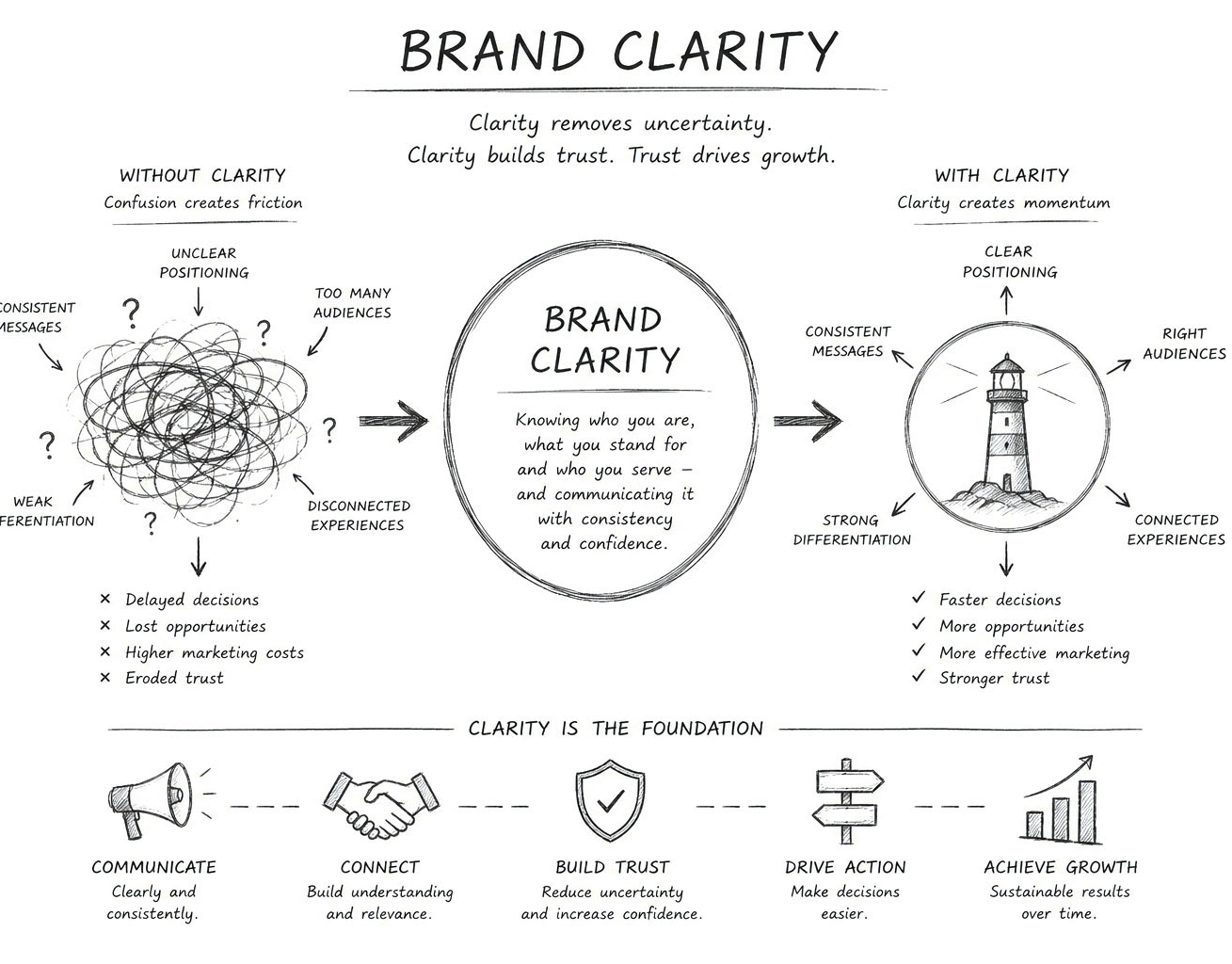
The opposite is equally true. Uncertainty accumulates in exactly the same way. A confusing website, inconsistent messaging, unanswered questions, delayed responses or a proposal that raises more questions than it answers may each appear relatively minor. Yet collectively they introduce friction into the decision-making process. Customers begin to hesitate, not necessarily because they have identified a serious problem, but because something no longer feels entirely reassuring. When confidence declines, decisions are delayed. Sometimes they are abandoned altogether.
This is why organisations should spend less time asking how they can persuade customers and more time asking how they can help them decide with confidence. Persuasion often attempts to overcome hesitation through stronger marketing or more compelling arguments. Confidence, by contrast, is earned by reducing uncertainty. It comes from making information easier to understand, creating consistent experiences and ensuring that every interaction reinforces rather than contradicts the promises being made.
The strongest organisations recognise that customers are not searching for perfection. They are searching for reassurance. They understand that no business can remove every uncertainty, but they also recognise that every unnecessary uncertainty can and should be eliminated. Clear communication, consistent behaviour and genuine expertise create an environment in which confidence grows naturally. Customers feel understood rather than pressured, informed rather than overwhelmed and supported rather than sold to.
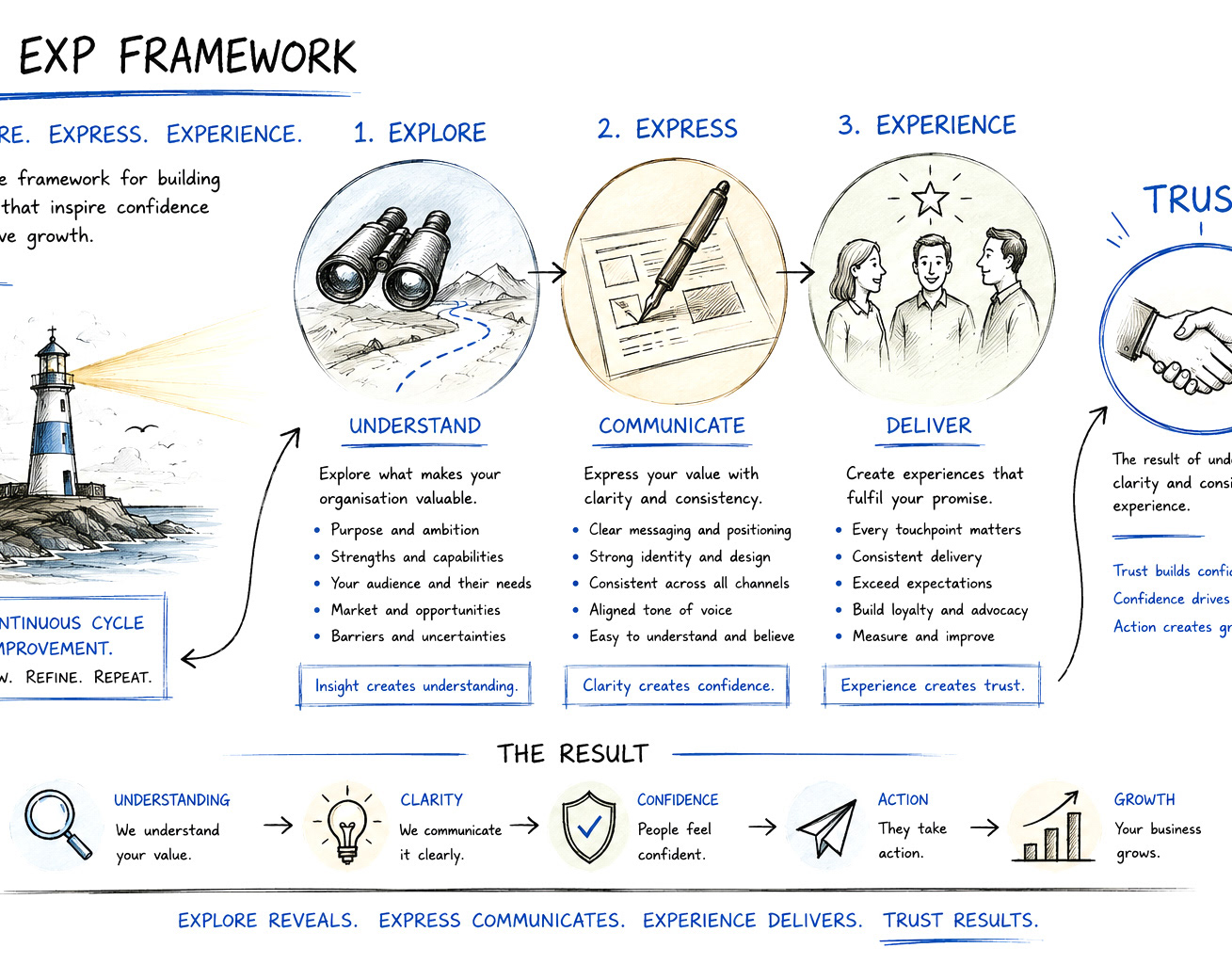
This way of thinking changes the role of branding and communication. Their purpose is not simply to attract attention but to make understanding easier. A strong brand helps customers recognise what an organisation stands for, how it is different and why it deserves consideration. It provides clarity in a crowded marketplace and creates consistency across every touchpoint. Good communication then reinforces that clarity by ensuring that expectations are realistic and promises are achievable. When expectation and experience align, trust grows stronger with every interaction.
Perhaps this explains why the organisations that enjoy the strongest reputations are often those that appear effortless to deal with. Their websites are intuitive. Their proposals are clear. Their people communicate well. Their customer experience reflects the values they promote. None of this happens by accident. It is the result of countless decisions that place the customer's perspective at the centre of the organisation. They have designed confidence into the experience rather than hoping it will emerge by itself.
Ultimately, customers choose organisations that make them feel confident about the future. They choose businesses that remove unnecessary complexity, communicate with honesty and consistently deliver what they promise. Price, products and expertise remain important, but they are interpreted through the lens of trust. When trust is present, people move forward with confidence. When trust is absent, even the strongest proposition begins to feel uncertain.
Understanding why customers choose you, therefore. begins with understanding why they hesitate. Remove the causes of uncertainty, strengthen every opportunity to build confidence and ensure that every interaction reflects the standards you wish to be known for. Do that consistently, and customers will not simply choose your organisation. They will recommend it, return to it and become advocates for it. In the end, that is how the strongest and most enduring business relationships are built.
___________________________________________
by David Clare FRSA
Founder, Exposed Design Consultants
Founder, Exposed Design Consultants
“The Journal is a collection of ideas developed through more than 35 years of working with organisations across retail, education, heritage, corporate and not-for-profit sectors. Every article explores one simple belief: when uncertainty is reduced, confidence grows; when confidence grows, trust follows; and when trust exists, organisations are far better placed to succeed.”
Trust by Design.